**Analyzing the Progression of Vice City: From GTA Vice City to GTA 6**
On Thursday, Rockstar Games revealed a much-awaited gameplay trailer for *Grand Theft Auto 6*, providing fans with nearly 30 minutes of captivating in-game footage. The game features a remarkable open-world setting reminiscent of the iconic *Vice City*, a fictionalized version of Miami, Florida. As the franchise revisits this cherished location 24 years after the debut of *GTA Vice City* on the PlayStation 2, it is intriguing to examine how drastically technology and game design have evolved since that time.
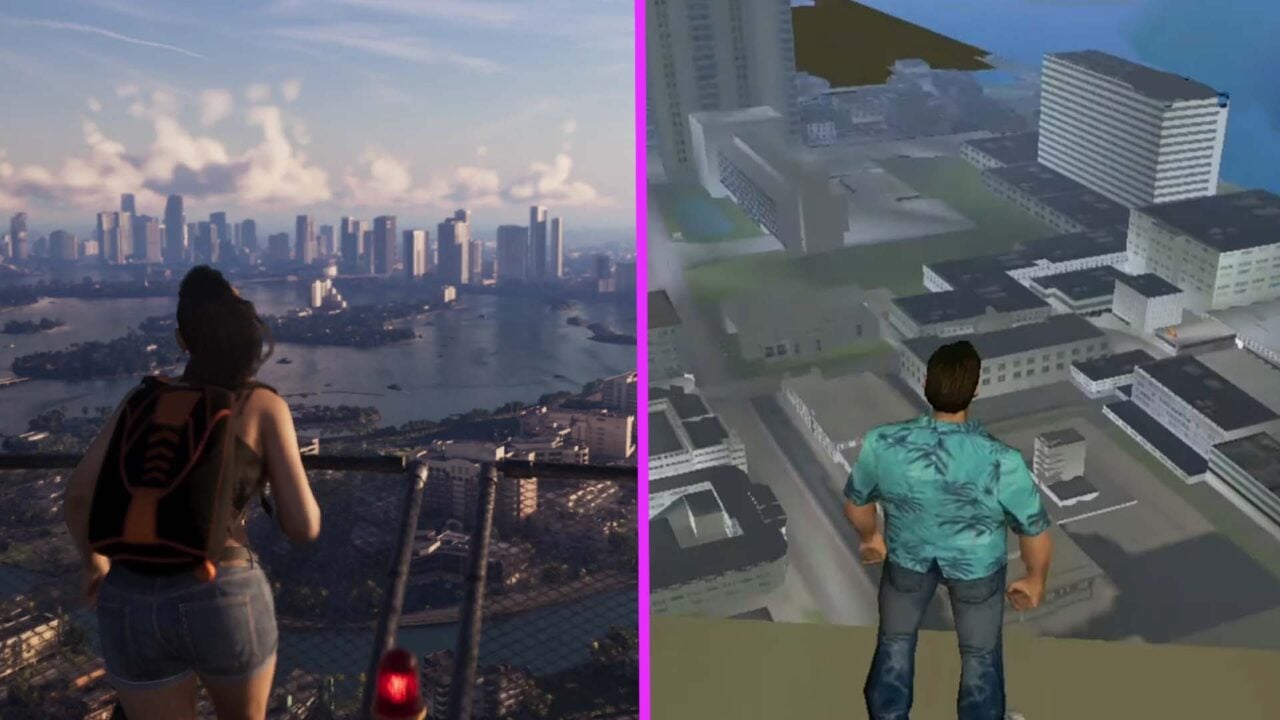
Originally launched in 2002, *GTA Vice City* swiftly transformed into a cultural sensation, enchanting players with its vibrant universe, intriguing story arcs, and nostalgic 1980s atmosphere. The game’s visual aesthetics were revolutionary for its era, yet when compared to the graphics of *GTA 6*, the disparities are tremendous. The graphical technology utilized in contemporary consoles has considerably elevated the details and realism in gaming landscapes, greatly surpassing the limitations of the PS2.
Through a collection of comparative screenshots from the gameplay trailer alongside scenes from both the original *Vice City* and its PC adaptation, it is clear that *GTA 6* exhibits a level of visual quality that seemed unimaginable two decades prior. In numerous scenes, such as a dilapidated trailer park—a location that aims to echo Florida’s varied terrain—the contrast in texture quality, lighting, and overall environmental intricacy is astonishing. Advanced game engines, including Rockstar’s unique RAGE engine, have equipped developers to craft environments that feel more vibrant and genuine.
Furthermore, social venues like dance clubs in *GTA 6* reveal a marked increase in crowd density and interactivity compared to the relatively empty ambiance of the Malibu Club in *Vice City*. This lively depiction of nightlife enhances player immersion, making the world appear dynamic and inhabited.
Although *GTA Vice City* was commendable for its time, playing a game on PS2 today exposes stark limitations in graphical prowess and environmental richness. The timeline of development also emphasizes the advancements in game design, with *GTA Vice City* taking around a year to develop in contrast to almost a decade for *GTA 6*. This prolonged development timeframe has permitted Rockstar to enhance their technology and narrative, culminating in a game that not only presents improved visuals but also potentially delivers a deeper and more intricate storytelling experience.
Lastly, the evolution of gameplay mechanics, such as police pursuits, illustrates a significant transformation in design. Players can anticipate far more advanced AI and an array of new interactions in *GTA 6*, fostering scenarios that are not only visually striking but also more engaging for players seeking thrill in the streets of Vice City.
As *Grand Theft Auto 6* gears up for its release on PS5 and Xbox this November, it serves as a benchmark for the remarkable progress in the gaming sector over the last twenty years. The juxtaposition between the 2002 classic and the forthcoming title highlights the unwavering pursuit of innovation in game development and the lasting legacy of the *GTA* franchise.