### System 3 Faces Criticism Over Upcoming *James Pond Legacy* Collection
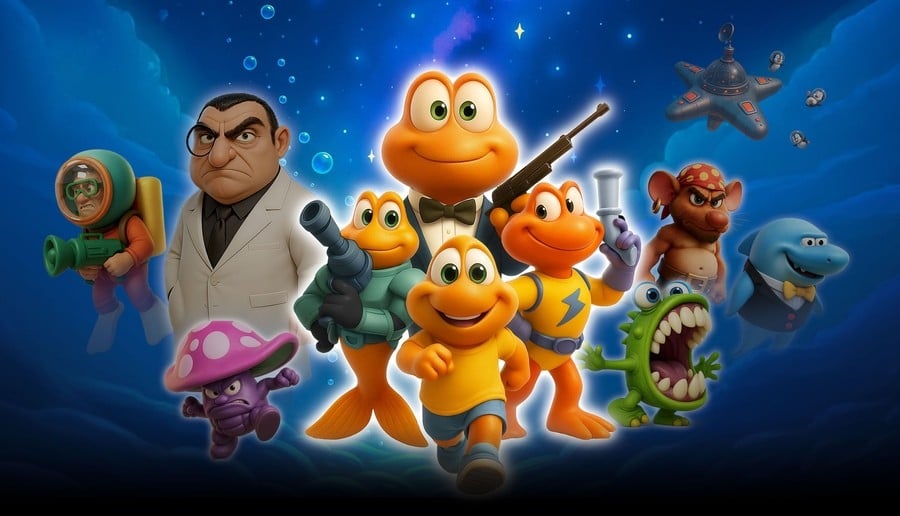
Recently, System 3, a video game publisher, became the center of controversy concerning the upcoming collection titled *James Pond Legacy: The Pond Is Not Enough*. The issue intensified following the release of a trailer that bore a resemblance to a poorly crafted birthday e-card. Additionally, worries about the incorporation of AI-generated art in the collection sparked public outrage and condemnation.
In light of the criticism, System 3 released a statement asserting that AI was not part of the collection’s creation. This claim left many perplexed, including Chris Sorrell, the co-creator of the *James Pond* series, who openly conveyed his discontent and disapproval of the publisher’s chosen path. “I’m sure it won’t shock you to hear that I was in no way consulted or involved,” Sorrell remarked during an interview with *Time Extension*. He denounced the disregard shown for the franchise, implying that anyone truly passionate about *James Pond* would have approached it with more consideration.
*James Pond* made its debut on the Amiga platform in 1990, rapidly gaining popularity and leading to several sequels and spin-offs, with *RoboCod* being particularly notable. Throughout the years, the series has been celebrated for its quirky appeal, and Sorrell’s later contributions to successful titles like *MediEvil* and *Prototype* demonstrated his expertise in game development. However, the *James Pond* collection has been viewed as a hasty cash grab, lacking the care and consideration that a cherished title merits.
The situation underscores a growing unease within the gaming community about the increasing dependence on AI technologies in game development. As various publishers confront this escalating backlash, System 3’s assertion of no AI involvement in their project appeared especially strange. Critics observed that the visuals and general aesthetic of the collection seemed predominantly AI-generated, raising further questions about the publisher’s honesty in their statements. Sorrell highlighted absurdities in the released production art, indicating that it was unlikely any developer would produce an Illustrator version of a character design that was already established.
During his interview, Sorrell emphasized his frustration regarding the treatment of the franchise that kickstarted his career. He praised other companies, such as Digital Eclipse, which are recognized for their careful archival practices concerning classic titles. Conversely, he contended that the *James Pond* collection exemplifies a troubling, short-sighted mindset that is increasingly common in the gaming industry, one that favors profit over passion and quality. Sorrell’s feelings culminated in a sharp comment, wishing that those accountable for the project “choke on an AI-generated fishbone.”
As the gaming community continues to grapple with the implications of AI in creative sectors, the situation with *James Pond Legacy* acts as a poignant reminder of the risks associated with overlooking the history and integrity of established franchises. It raises essential questions about the future trajectory of the industry and the significance of preserving the essence of beloved titles for both long-time fans and new generations.