# Nvidia DLSS 5: The Future of Neural Rendering in Gaming
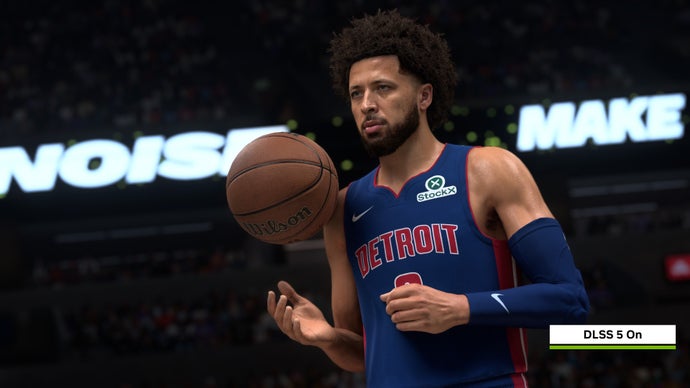
Nvidia’s latest advancement in gaming graphics technology, DLSS 5, is set to make waves with its official launch coinciding with the release of NBA 2K27. Initially, it was exposed by modders who uncovered it from game files, leading to a mix of anticipation and concern over its AI-driven capabilities. This advanced neural rendering technology promises to elevate the gaming experience by generating rich lighting and material details while preserving the original artistic intent of game developers.
## What is DLSS 5?
DLSS, or Deep Learning Super Sampling, is a technology developed by Nvidia that leverages artificial intelligence to enhance visual performance in video games. DLSS 5, launching on September 3rd, introduces a feature known as 3D-Guided Neural Rendering. Unlike previous iterations, which primarily focused on reconstructing existing scene data, DLSS 5 employs AI to synthesize intricate lighting and material characteristics that real-time rendering constraints often limit.
The process utilizes the game engine’s rendered frames, along with the artist-designed geometry and textures, as a baseline. This allows DLSS 5 to act as the final rendering phase in the graphics pipeline, infusing scenes with more lifelike visuals while adhering to the developer’s original design. Nvidia asserts that the technology maintains the basic facial proportions and geometry created by developers, altering only aspects like light responses and material detail.
## The Controversial Reception
Upon its initial reveal earlier this year, DLSS 5 faced backlash for its tendency to produce “yassified” character designs—portraying them in a manner akin to social media filters rather than their in-game designs. Notably, comparisons drawn from titles like Resident Evil raised concerns among players about the potential dilution of character integrity. However, early demonstrations of DLSS 5 in NBA 2K27 have shown that while the technology introduces changes, the results appear less jarring, as characters do not always engage directly with the camera, reducing the uncanny valley effect.
The choice of NBA 2K27 for DLSS 5’s debut is strategic. The game strives for a photorealistic representation of real-world basketball, which might mitigate controversy over maintaining artistic intent compared to more stylized games.
## Progress and Future Potential
Since its announcement, Nvidia has reported significant advancements in DLSS 5’s performance. Initially requiring dual GeForce RTX 5090 graphics cards, the technology now operates effectively on a single GPU with a claimed performance boost of up to 5X within a mere six months. Nvidia aims to optimize the technology further, projecting improvements in both speed and image quality with upcoming updates.
The company emphasizes its commitment to constantly enhancing DLSS performance and user experience, backed by over a decade of experience in AI-driven graphics rendering.
## System Requirements and Availability
To utilize DLSS 5 in NBA 2K27, players will need a GeForce RTX 50 Series GPU, a requirement that ensures the technology can function without compromising performance. For those looking to experience DLSS 5 without upgrading their hardware, streaming via GeForce Now presents an alternative option. Detailed instructions for setting up the new driver to enable DLSS 5 will be provided upon the release.
## Conclusion
DLSS 5 represents a significant step forward in the world of gaming graphics, promising to deliver unprecedented visual fidelity and performance. As it debuts in NBA 2K27, the gaming community will closely monitor player reactions and performance outcomes, particularly to see if concerns over artistic integrity remain valid or if Nvidia’s claims hold true. Whether embraced or critiqued, DLSS 5 is poised to reshape the landscape of video game rendering, making it an exciting development for gamers and developers alike.