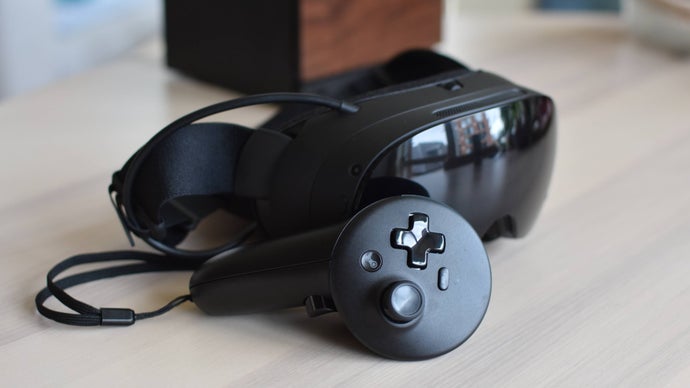
### The Steam Frame: Pioneering VR and ARM Architecture Compatibility
The Steam Frame, Valve’s latest foray into the virtual reality (VR) sector, offers a unique capability among VR headsets: it can independently run Steam games – both VR and traditional ‘flat’ games – using its integrated computing hardware. Essentially functioning as a SteamOS-powered PC designed for immersive experiences, the Steam Frame’s potential extends beyond its immediate use case, suggesting new horizons for gaming across various platforms.
#### ARM Architecture Advantages
Traditionally, most PC games have been built to operate on x86 architecture, which is prevalent in Intel and AMD processors. However, the ARM architecture has gained traction outside of gaming due to its efficiency and longevity, particularly in mobile devices and lightweight laptops. Transitioning to an ARM chip for the Steam Frame was a strategic decision by Valve. Despite a short roster of compatible games—typically a few hundred compared to the thousands available for x86—Valve aimed to bridge this gap by employing an innovative solution.
#### FEX: The Emulator at Work
The crux of the Steam Frame’s capability lies in FEX, an open-source emulator that translates x86 instructions into ARM. Valve discreetly supported FEX’s development over several years, similar to how Proton enables Windows games to function on the Linux-based SteamOS. This initiative allows a significant portion of the gaming library to be accessible to the Frame, contributing to its appeal.
Valve engineer Pierre-Loup Griffais emphasized the company’s intent to leverage the advancements of the Steam Frame to enhance compatibility across other ARM-based devices. He envisions expanding the SteamOS experience beyond the Frame, potentially transforming modern ultraportable laptops and compact PCs into capable gaming machines. Griffais noted, “There’s a lot of devices where you could have a great experience running SteamOS on there,” underscoring the desire to remove barriers presented by device-specific limitations.
#### Challenges and Future Directions
While FEX marks a groundbreaking step, challenges remain, especially concerning device trees—the data structures that define the hardware configuration of various ARM chips. This variability can complicate efforts to implement a universal gaming experience across devices. However, Valve’s commitment to overcoming such obstacles reflects their broader strategy of democratizing access to gaming.
The philosophy extends into hardware development as well. Josh Hudman of Valve indicated that the company’s approach focuses on creating multifunctional technology that can benefit a range of devices. Instead of developing components tailored exclusively for VR, Valve seeks to enhance the overall gaming ecosystem by investing in technologies that improve usability and compatibility.
#### Conclusion
The Steam Frame represents a significant leap towards a more inclusive gaming landscape, especially for enthusiasts interested in the capabilities of ARM architecture. With Valve’s ongoing efforts to enhance compatibility and functionality across various platforms, the potential for more devices to support Steam and its games looks promising. This strategy may not only foster greater accessibility for gamers but also inspire further innovation in hardware and software integration, making the future of gaming more versatile than ever.