**The Great Schism and the Pope’s Unconventional Reign in Crusader Kings 3**
January 3rd, 902 AD, marks a significant and tumultuous moment in both history and the world of gaming, especially in the context of *Crusader Kings 3* and its *By God Alone* expansion. Players find themselves navigating a fractured Christian faith amidst a backdrop of political and personal chaos, as the Eastern Orthodox and Roman Catholic churches emerge from their schismatic fracture. This article delves into the complex narratives that emerge from this period, exploring the challenges faced by a Pope caught in circumstances beyond his control.
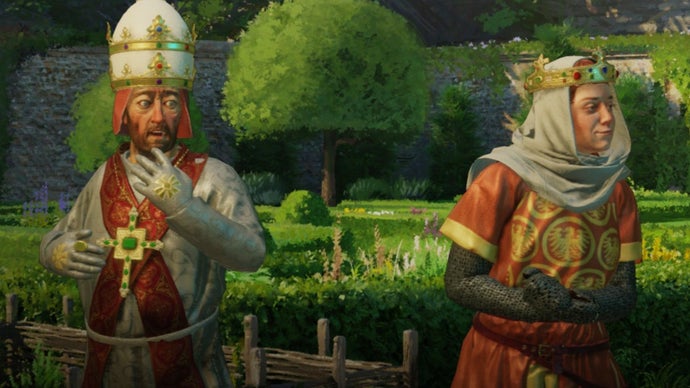
As the player assumes the role of Pope Nicolaus, a character thrust into a crumbling ecclesiastical hierarchy, the immediate impact of surrounding turmoil is tangible. Nicolaus’s multifaceted identity as the leader of the Catholic world becomes even more pronounced as he grapples with personal relationships. The abrupt departure of three wives, alongside a broken betrothal, introduces a layer of personal strife that mirrors the religious schism itself. The paradox of a Pope ensnared in conflicts of the heart catalyzes a journey filled with unexpected twists.
In the historical realm surrounding the schism, the Catholic Church in the West continued its devout adherence to the Latin rite, whereas the Byzantine Empire to the East forged a new path embracing Greek rites, culminating in the establishment of Eastern Orthodoxy. This divergence set the stage for competitive ecclesiastical factions, each vying for the allegiance of believers. Within *Crusader Kings 3*, the schism is not merely a backdrop but a catalyst for gameplay dynamics, allowing players to influence religious direction and challenge societal norms.
A significant aspect of the gameplay experience is the ability to impact the religious landscape. The player leads efforts to consolidate power within the Roman Rite while navigating the nuanced relationships between various Christian factions, including the Carolinginian Rite. Engaging with different stages of religious sentiment, players can embark on holy wars, initiate mass conversions, or even witness the rise of influential reformers seeking change. Over time, these dynamic religious interactions mirror historical tensions that shaped Europe throughout the Middle Ages.
As Pope, the character’s efforts to confront the potential schism yield mixed results. His initiatives to appoint cardinals, construct Romanesque cathedrals, and undertake pilgrimages contribute to the ambitious aim of preventing a fracture. Yet, as the narrative plays out, the interplay of external pressures, personal quests, and the evolving religious doctrine leads to radical changes within the Roman Rite, including the controversial embrace of polyamory. This radical shift, while revolutionary, spurs further alienation among factions and contributes to the inevitable schism.
The new rule sets the stage for polygamous unions, reshaping the traditional constraints of papal authority and introducing a unique twist in the gameplay. As the Pope navigates romantic entanglements and political maneuvering, including schemes against influential queens, the convergence of spirituality and personal desires becomes a defining theme. The resultant offspring, both legitimate and illegitimate, further complicate the narrative as players witness the increase in familial complexities that stem from the Pope’s unorthodox decisions.
Despite the banter and innovative gameplay—characterized by moments reflecting the absurdity of a sexually active Pope—the schism ultimately unfolds as anticipated. With the Roman Rite solidifying into Catholicism and the Greek Rite forming Eastern Orthodoxy, the player’s experience encapsulates the weight of leadership amidst a fractured faith. The dissolution of marriages emphasizes the cost of radical change in the religious landscape, prompting reflection on the balance between power, faith, and personal life.
As players journey beyond this tumultuous period, the narrative transitions to different branches and characters, such as King Rostislav of Great Moravia and his ambition to establish a new Slavic Rite. This storyline reiterates the intricate dance of power and religious allegiance, with challenges persisting even in the face of new traditions.
In conclusion, the *By God Alone* expansion of *Crusader Kings 3* offers a rich tableau of narrative possibilities that reflect historical tensions surrounding the Christian schism. With its blend of personal strife, radical ecclesiastical reforms, and the overarching goal of navigating faith amidst chaos, players are given a unique opportunity to not only shape a religious legacy but also immerse themselves in the complexities of leadership, identity, and societal change. For those enthralled by the intertwining of history and gaming, this expansion indeed opens doors to adventure, intrigue, and the unpredictable nature of a world in flux.