**The Quirky Appeal of Deadpool: A Deep Dive into the Merc with a Mouth**
Deadpool, a character created by Rob Liefeld, stands out in the vast Marvel universe as one of the most unconventional and engaging figures. Like fellow mutant Wolverine, Wade Wilson possesses a remarkable healing factor that enables him to recover from any form of injury—whether it’s a grievous wound or being completely bisected. However, what truly distinguishes Deadpool from other heroes is his acute awareness of being a fictional character. This unique trait allows him to break the fourth wall, leading to a barrage of meta-commentary and pop culture references that form the crux of his personality.
This characteristic has been interpreted in various ways throughout different media. It can be seen as a reflection of Wade’s insanity, or his awareness could be interpreted as a narrative device, granting him the ability to manipulate his surroundings. This level of meta-awareness has solidified his character identity, particularly in various comic runs and in notable media adaptations, such as the hugely successful 2016 film featuring Ryan Reynolds.
However, writing a character endowed with such power presents a unique challenge. While Deadpool’s incessant quips are intended to amuse readers and characters alike, there’s a thin line between comedic charm and irritation. Creator Liefeld aimed for Deadpool to be a more anarchic version of Spider-Man—an assailant of sanity in the often serious superhero environment. This aspect becomes problematic when Deadpool’s humor begins to wear on the audience rather than serve as a source of enjoyment.
One prominent example is the 2013 video game, where players found themselves overwhelmed by Wade’s relentless chatter, replete with often dated references and self-aware jokes. Nolan North’s portrayal in this game, while entertaining, sometimes felt akin to the kind of humor that fell flat for many—a repetitively loud amalgamation of internet meme culture and self-importance. In comparison, earlier appearances in games like “Ultimate Marvel vs. Capcom 3” presented a more focused and nostalgic approach to the character’s humor.
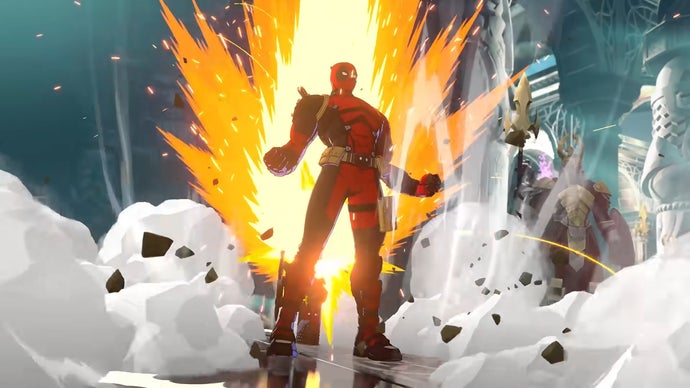
Recently, the game “Marvel Tōkon: Fighting Souls” provides an innovative take on Deadpool that carefully treads the line of annoyance, allowing players to enjoy his humor without it becoming grating. Instead of referencing every possible cultural touchpoint, this version of Deadpool shows a specialized knowledge of fighting games, making his references feel more strategic and meaningful. His awareness stems from an in-universe scenario where he acquires a fighting game strategy guide which informs his moveset and obtained dialogue.
Within “Marvel Tōkon,” Deadpool’s range of references draws upon a rich history of fighting games. His abilities creatively merge various iconic moves from beloved franchises such as Street Fighter and Mortal Kombat, distilling the essence of these games into his own gameplay. For example, callbacks to Kazuya’s Electric Wind God Fist and E. Honda’s butt slam serve as a delightful homage to fighting game history, while also contributing to Deadpool’s uniquely irreverent style.
This particular game cleverly integrates Deadpool’s attributes with his abilities. To unlock some of his most powerful moves, players must actively inflict damage upon themselves, cleverly tying into his healing factor and presenting a gameplay experience that is both innovative and true to the character. The humor remains light-hearted and affectionate, steering clear of any attempts to undermine other characters or franchises.
Importantly, “Marvel Tōkon: Fighting Souls” showcases a profound respect for the fighting game genre, showcasing a passion that resonates with long-time fans. Each reference serves a purpose beyond mere gag, reflecting a deep appreciation for fighting games while respecting Deadpool’s character legacy. This thoughtful execution allows Wade Wilson’s persona to come full circle—not only as a mercenary aware of his role but as a deeply layered character who can gloriously revel in the playful chaos of gaming.
In conclusion, Deadpool’s evolution from a mere comedic anti-hero to a well-rounded character with a heartfelt connection to gaming culture indicates the potential for more nuanced interpretations within the superhero genre. Games like “Marvel Tōkon: Fighting Souls” illustrate that with the right approach, it is possible to embrace both the zany wit of Deadpool and the intricacies of the universe in which he exists, proving that even the most erratic characters can offer profound appreciation for the mediums they inhabit.