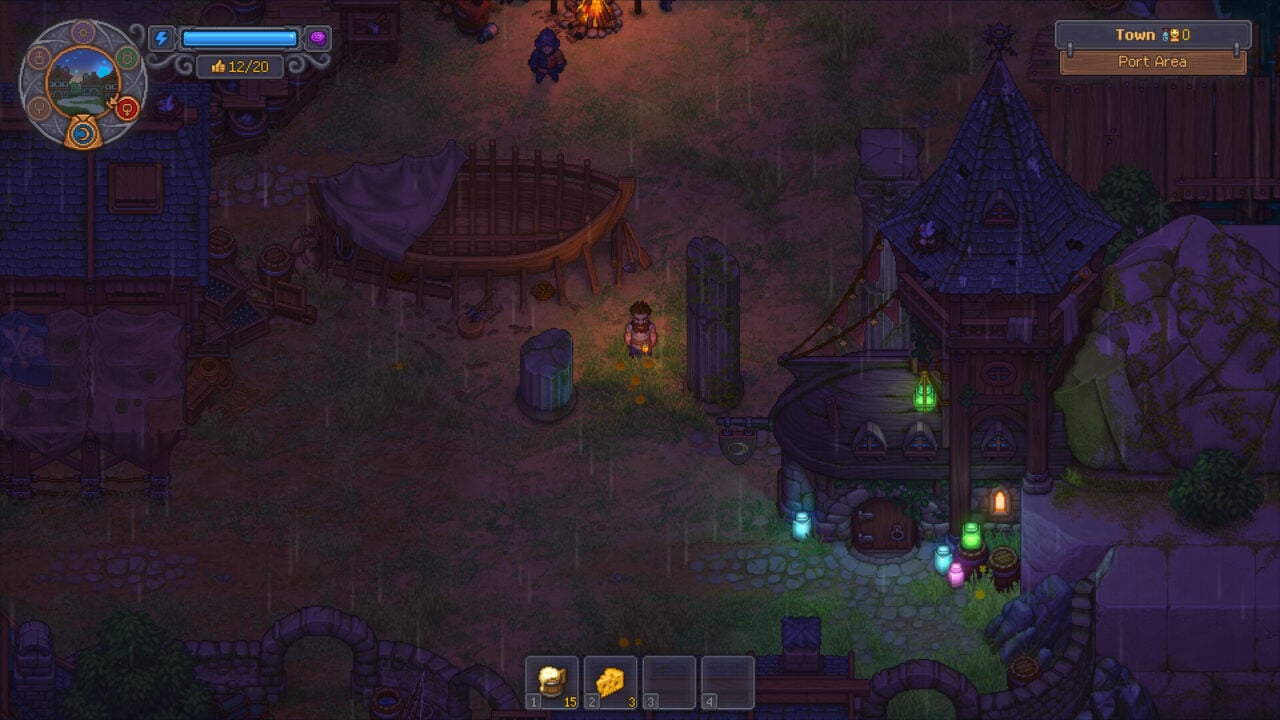
**Graveyard Keeper 2: A Dark Expedition Through Resource Management and Narrative Blunders**
It’s quite likely that numerous gamers have played *Graveyard Keeper*, especially after its release for free on Steam in April. This endearing yet somewhat morbid resource management simulator draws strong influence from the cherished *Stardew Valley*, blending elements of resource harvesting and crafting with a wickedly humorous edge, all showcased in captivating pixel art. For those willing to devote roughly 50 hours, it guarantees an immersive experience, particularly for players who revel in this type of grind-heavy gameplay.
In the wake of the original’s success, developer Lazy Bear Games launched *Graveyard Keeper 2* on September 22. After dedicating around 20 hours to the sequel, it is clear that while the core gameplay remains predominantly similar, the new version provides a revitalized experience through various quality-of-life enhancements.
The improvements found in *Graveyard Keeper 2* alleviate the grind, especially in terms of inventory management, which is a welcome relief for users familiar with the chaotic aspects of resource gathering and crafting. On the visual front, the pixel art has seen a significant upgrade, looking crisper and more polished. Moreover, the addition of fully voiced dialogue brings a new dimension to character exchanges, though the results can be mixed.
While *Graveyard Keeper 2* builds upon the groundwork set by its predecessor, it also weaves in a narrative that feels more pronounced. The story in the first game, although present, mainly served as a backdrop. In contrast, *Graveyard Keeper 2* further prioritizes the plot, which at times can become overwhelming. Frequent interruptions for quests and dialogues can disrupt gameplay flow, hindering the fun derived from the essential management mechanics.
A major drawback noted in the sequel is its narrative tempo. The sync between management simulation features and storytelling often feels mismatched. Players who thrive on the classic resource management cycle may grow impatient, as dialogue-heavy segments frequently divert them from their preferred activities, like crafting, farming, or exploring. This shift complicates engagement when NPCs endlessly chatter with dialogue that can seem superfluous and dull.
The abundance of conversations, rather than enhancing the gameplay experience, turns into a hindrance. Players might find themselves trapped in drawn-out cutscenes that stall their progress, fostering a desire to rush through the dialogue instead of taking in any substantial storyline.
A crucial comparison can be made to *Stardew Valley*, which graciously allows players to engage with character interactions at their own convenience. In stark contrast, *Graveyard Keeper 2* demands players push through incessant dialogue, even when they would rather concentrate on resource collection or strategizing their farming ventures.
The annoyance stemming from this scenario is only heightened by the fact that advancing in resource management typically relies on interacting with NPCs and completing their tasks. Consequently, players may feel ensnared in a loop of obligatory dialogue and quest fulfillments, ultimately detracting from the enjoyment that *Graveyard Keeper 2* intends to provide.
While *Graveyard Keeper 2* indisputably offers quality-of-life enhancements and visual improvements, it falters in its narrative execution. For many, the extra dialogue fails to offer a compelling incentive to spend time and money on this sequel, especially considering *Graveyard Keeper*—originally provided for free—continues to supply a satisfying experience with less frustration. The onus is on the developers to strike a balance that ensures the rich narrative enhances rather than detracts from the gameplay. As it stands, players may find themselves reevaluating the worth of *Graveyard Keeper 2*, particularly if they favor the streamlined experience of its predecessor.