### Exploring the Metaphysical Boundaries in Santa Ragione’s *Horses*
Santa Ragione’s *Horses* is a unique horror game that intricately weaves themes of representation, control, and the subjugation of the body within its narrative. As players engage with this grotesque world, they are prompted not only to confront the game’s monstrous undertones but also to navigate the philosophical and existential implications of their choices.
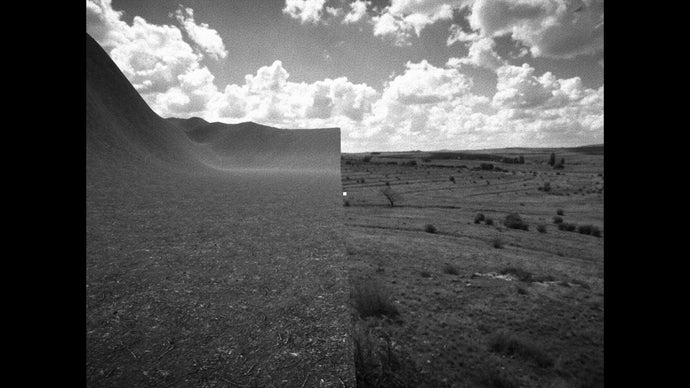
A pivotal moment occurs towards the game’s climax, revolving around a seemingly simple act: snipping a hole in a wire fence that serves as a metaphor for breaking free from the oppressive structures of the game world. This moment encapsulates the broader theme of *Horses*, where the act of escape becomes a testament to personal agency in the face of omnipresent control. However, as the escape attempt is thwarted, the hole in the fence is subsequently boarded up, reinforcing the bleakness and futility often inherent in horror narratives.
Despite the perceived constraints of the game, an unexpected opportunity arises. Upon returning to the boarded fence, the player discovers the repair is incomplete, and the tantalizing possibility of slipping through becomes a challenge. This act symbolizes a deeper quest in *Horses*: the yearning to transcend the confines of the game’s narrative and mechanics, embodying an implicit rebellion against the limitations imposed by traditional gameplay.
The complexities of the game extend to its commentary on the medium itself. *Horses* critiques the technologies of representation, suggesting that the act of creating images can also serve as a means of control and violence. The game resonates with historical references to the film industry, such as the unsettling connections between horse breeding and the production of film emulsion from animal remains, prompting players to reflect on the often dark undercurrents of artistic creation.
A striking aspect of the game is its engagement with the tools of gaming: the camera and interface emerge as antagonists that both empower and constrain the player. The act of sabotaging a massive film projector embodies this tension; the player’s defiance is meaningful yet paradoxical, as the game continues even after this act of rebellion. This raises questions about the nature of games as systems where the player is simultaneously the operator and the victim of its design.
The allure of breaking free from the game’s prescribed narrative is a common theme that resonates with many players. The experience of venturing off-map elicits a primal thrill, a quest for autonomy against the backdrop of restrictive boundaries. Successfully navigating through the game’s often rigid structures to uncover hidden spaces can offer a sense of empowerment. It allows players to transition from mere participants to active agents in the game’s construction, seeking freedom in an otherwise controlled environment.
As players step beyond the fence, the world of *Horses* unfurls in surreal beauty and chaos, juxtaposing the mechanical precision of its horror narrative with the organic, distorted landscape that lies beyond. Here, the player encounters a liberated space that evokes a sense of adventure, devoid of the oppressive gaze of the Farmer, allowing for an exploration that transcends the rigid confines of the game’s design.
Ultimately, whether this act of transgression is a product of clever game design or a player-initiated rupture remains ambiguous. Nevertheless, the experience is exhilarating, inviting players to reflect on the nature of the game and their role within it. The sense of autonomy achieved by pushing through the fence represents a climactic moment in *Horses*, where the player’s journey concludes not with a traditional ending, but rather with a defiant embrace of freedom—an exploration of the boundary between the game and the self, between constraint and liberation.