### The Charm of Imperfection: An Exploration of the Gold Star Charizard and Its Surprising Sale
The realm of Pokémon card collecting is frequently characterized by strict grading criteria and meticulous focus on condition. Collectors strive for cards that are impeccable, graded with high values to enhance their worth. However, a peculiar incident challenges this standard: a Gold Star Charizard, among the most desired cards from the Pokémon Trading Card Game, was recently sold for $550 despite being in what can only be labeled as dreadful condition. This transaction underscores an intriguing element of collecting—value can originate from uniqueness and history just as much as from immaculate condition.
#### The Gold Star Charizard: A Dream for Collectors
The Gold Star Charizard is an iconic card that debuted in the 2006 EX Dragon Frontiers set. It possesses considerable value in the Pokémon card landscape. A flawless version of this card, graded PSA 10, can command prices over $58,000, while a card in less desirable condition, without grading, may still garner nearly $2,000. The appeal of this card lies not only in its visual appeal; it signifies a formidable character within the Pokémon realm, cherished by fans across generations.
Collectors usually hunt for sealed packs from this set, which can be quite pricey—generally around $1,000—while sealed booster boxes containing 36 packs can fetch astonishing prices, occasionally soaring to $135,000. Even the empty packaging carries notable value, with prices for vacant boxes surpassing $200. The scarcity and appeal of cards like the Gold Star Charizard—and its counterparts such as Gold Star Mew and Rayquaza ex—highlight this trend. Each contributes to a burgeoning market where chance is a vital factor in discovering valuable items.
#### An Unusual Sale: The “World’s Worst Charizard”
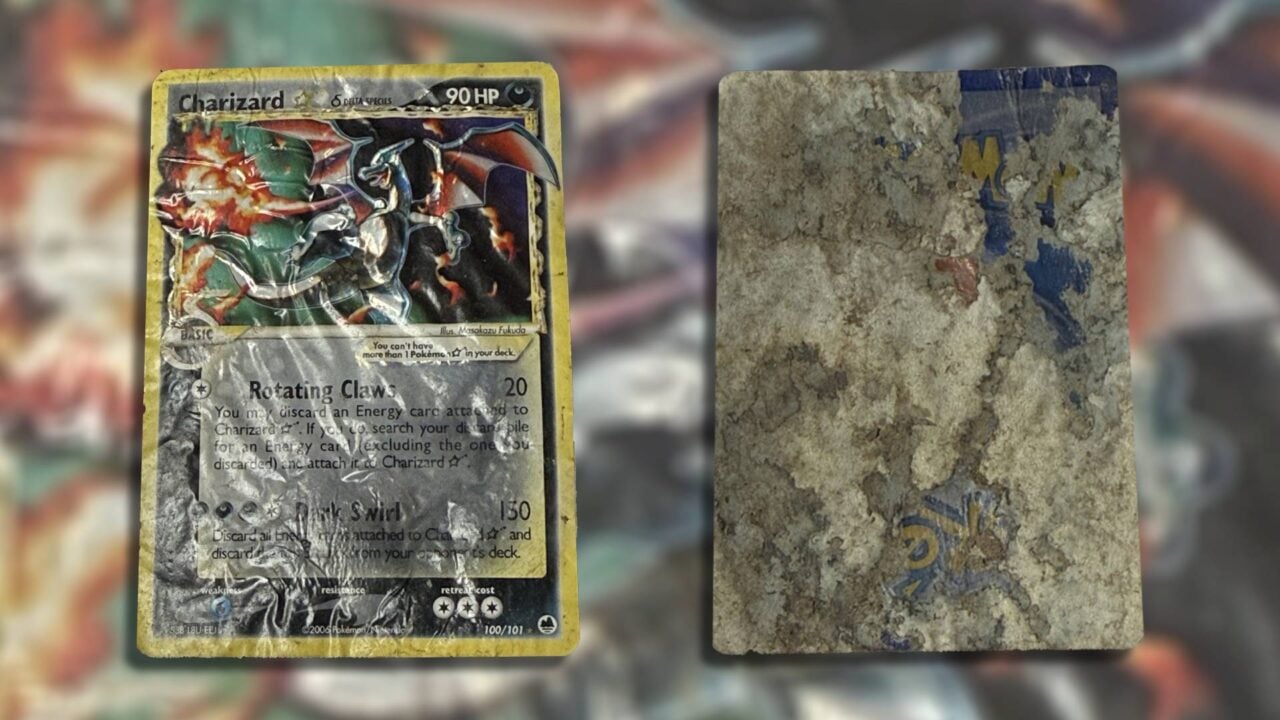
In a comedic turn, a specific listing on eBay featured the infamous Gold Star Charizard in such a poor state that it appears to have endured both fire and water damage. Marketed as “WORLDS WORST CHARIZARD GOLD STAR EX Dragon Frontiers 100/101,” this card was boldly categorized as trash, with the seller recounting the quirky saga of locating it on a playground after rain. The description confirmed that it was “TRASHED,” accentuating its damaged condition while highlighting its rarity as an example of imperfection.
The seller indicated that this was not a card for the meticulous collector in search of quality but for someone who appreciated the unique narrative tied to this worn piece. The final price of $550, while seemingly meager compared to pristine counterparts, reflects the playful and nostalgic spirit of the collector community. The card’s undesirable state did not diminish its worth for certain collectors; instead, it added an eccentric charm.
#### Views on the Sale
The excitement surrounding this sale, as noted by sources including WarGamer, illustrates the varied motivations that drive collectors. While many aim to invest in top-condition cards, others find joy in the tales behind their acquisitions. This sale exemplifies the idea that value is not solely linked to perfection but can also arise from personal connections, nostalgia, and the quirky history of a specific item.
Moreover, the dynamics of the Pokémon card market reveal the profound interrelation of nostalgia, rarity, and condition. Cards that evoke childhood recollections, such as this Charizard, may appeal to collectors who are interested not just in the financial worth but in the sentiment of owning a piece of their childhood dreams.
### Conclusion
In the continually changing landscape of Pokémon card collecting, a recent transaction involving a severely damaged Gold Star Charizard demonstrated that even in the worst state, captivating stories and surprising value can emerge. It reinforces the idea that each card carries with it a narrative that resonates beyond its physical appearance, connecting collectors in a mutual journey filled with nostalgia, achievements, and occasionally, humor. This incident serves as a reminder that the essence of any collection lies not only in the cards themselves but also in the experiences and memories they encapsulate.