### Nvidia’s G-Sync Pulsar: A New Era in Motion Clarity for PC Gaming
Nvidia’s relationship with PC gaming has long been complex. They swing between actions that benefit gamers, like introducing powerful new technologies such as DLSS, and those that frustrate, such as driving up RAM prices. Amid this rollercoaster, Nvidia has introduced G-Sync Pulsar, a new technology aimed at enhancing monitor performance and clarity in fast-moving gaming scenarios.
#### Understanding G-Sync Pulsar
G-Sync Pulsar-equipped monitors tackle an issue that has plagued LCD technology ever since its inception: motion blur caused by the ‘sample and hold’ effect. This phenomenon occurs when a display holds an image on-screen for the entirety of a refresh cycle, leading our brains to perceive blur in fast-moving scenes. While existing technologies like OLEDs and backlight strobing have attempted to mitigate this issue, they often come with trade-offs, including flickering and reduced overall brightness, as well as incompatibility with variable refresh rates (VRR).
G-Sync Pulsar seeks to overcome these limitations by employing a refined backlight strobing method. Instead of turning the backlight on and off for the entire screen simultaneously, Pulsar divides the display into ten horizontal zones, refreshing them sequentially from top to bottom. This innovative approach eliminates perceptible flickering while maintaining consistent screen brightness.
#### The Demo Experience
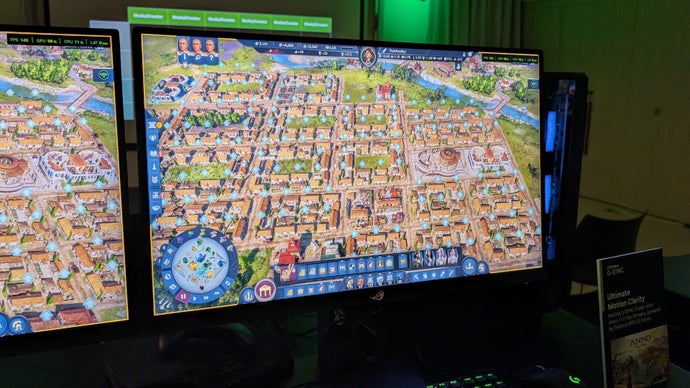
During a recent demo, the difference between a monitor with G-Sync Pulsar and one without was striking. In the game *Anno 117: Pax Romana*, the monitor with Pulsar enabled showcased significantly clearer details during rapid movements, even when both systems delivered similar frame rates. Trees and building textures which blurred on the non-Pulsar monitor became distinctly outlined and easier to see, illustrating Pulsar’s effectiveness in enhancing motion clarity.
Importantly, Pulsar does not artificially produce or interpolate frames; it optimizes the display’s performance to compensate for natural limitations. This focus on clarity is particularly valuable as graphics card improvements plateau and their costs rise.
#### Pricing and Compatibility
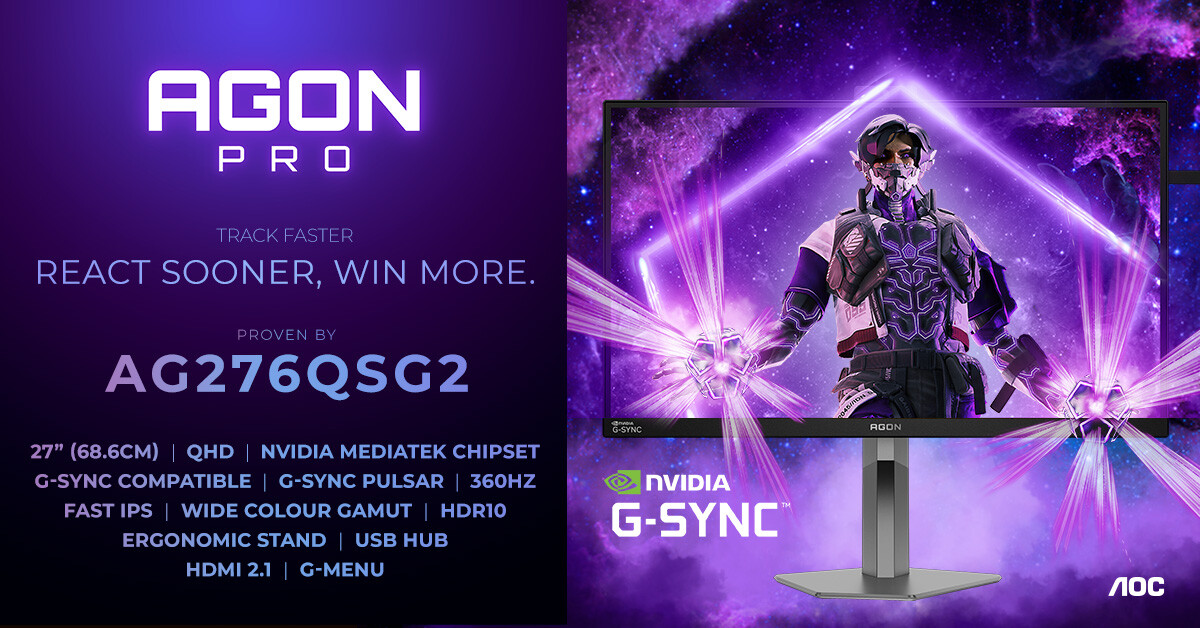
Currently, G-Sync Pulsar is available in select monitors. The Asus ROG Strix XG27AQNGV, which was used during the demo, retails for around £629, while the AOC Agon Pro AG276QSG2 offers similar specifications for about £559. Both prices are significant, vying for the cost of high-end 4K OLED displays.
While Pulsar is compatible with older Nvidia GPUs dating back to the Maxwell-era GTX 900 series, the requirement of a new monitor could deter many gamers. Furthermore, the current lineup is limited to LCD technology, which may not appeal to those who prefer the deep colors and contrasts offered by OLED panels.
#### The Future of Gaming Clarity
Nvidia’s G-Sync Pulsar technology signifies a promising advancement in the pursuit of enhanced gaming visuals. By tackling long-standing display issues without sacrificing essential compatibility features or introducing noticeable drawbacks, Pulsar has the potential to revolutionize motion clarity in PC gaming.
While it’s essential to consider the accompanying costs and product limitations, the improvements offered appear substantial enough to warrant exploration. As gamers seek higher fidelity experiences, technologies like G-Sync Pulsar may represent a significant step forward in creating a more visually engaging and immersive gaming environment.