### The Legacy of Firewatch: A Look into Reactive Narrative Games
As Campo Santo approached the completion of their critically acclaimed title, Firewatch, Chris Remo expressed a desire to push the boundaries of their innovative ideas further. Reflecting on the development experience, he stated, “I remember feeling, ‘God, if we made this exact same game again now, we could take these ideas so much further’.” Released to the public in 2016, Firewatch became a hallmark in narrative-driven gaming, focusing not solely on player interactivity, but rather on how the narrative reacts to player choices.
#### The Vision Behind Firewatch
In the aftermath of Firewatch’s success, Remo began sharing insights on their project’s core objectives. The team’s intent was to create a game that emphasized reactivity over traditional interactivity, positing that this new model could pave the way for a subgenre of reactive narrative games. Despite Remo’s hopes, ten years later, this vision for reactive narrative games has not seen substantial replication within the industry.
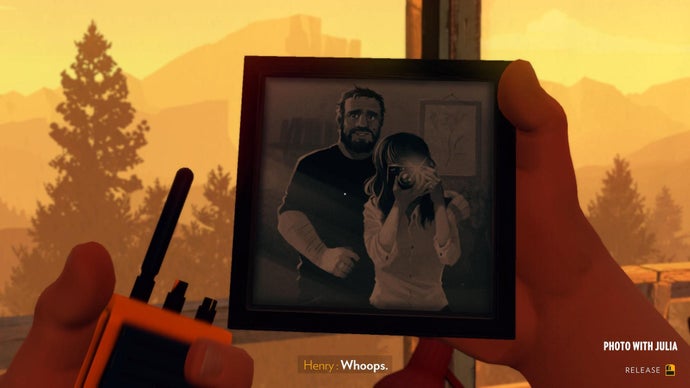
Firewatch has often been categorized as a walking simulator. However, the influences that shaped it are more intricate. By embedding their narrative exploration within a present-tense setting and drawing on mechanics from first-person games like *Mirror’s Edge* and *Far Cry 2*, while incorporating elements inspired by immersive sims like *Deus Ex* and *Bioshock*, Campo Santo crafted an engaging experience. The game’s environment dynamically responded to player choices, with the dialogue, item collection, and the vistas experienced by the protagonist, Henry, all reflecting back on his interactions with Delilah.
Remo emphasized this uniqueness, stating, “You’re simply doing things as a human being and then the world reacts to that.” Although he acknowledged that Firewatch wasn’t the pinnacle of these ideas, it sought to explore a new frontier in gaming narratives.
#### Development Beyond Firewatch
After completing Firewatch, Campo Santo undertook the development of another project, described by Remo as “much more puzzly.” This project aimed to expand upon the ideas of reactive narrative but within a more traditional gameplay context. Their subsequent endeavor, *In The Valley Of Gods*, was intended as a direct sequel to Firewatch, expanding on both narrative and mechanical ambition.
However, following Valve’s acquisition of Campo Santo in 2018, the team redirected their efforts towards other projects like *Half-Life: Alyx*, ultimately placing *In The Valley Of Gods* on indefinite hold in 2019.
#### Challenges of Reactive Narrative Design
Remo reflects on why the principles embodied in Firewatch did not resonate broadly in the gaming landscape. He points out the inherent difficulties in designing reactive narratives compared to traditional gaming formats, noting that, “It’s more difficult than people think.” The challenge lies not just in technical capacities but in creating engaging gameplay experiences that sustain player attention without relying on more conventional mechanics like combat or puzzles.
Additionally, Remo highlights the cost and complexity involved in crafting compelling narrative scenes in video games compared to film. In cinema, two actors can effectively convey a rich narrative with minimal production costs. In contrast, video games require significant resources to achieve similar expressiveness.
#### The Impact of Player Expectations
Remo further articulates that contemporary gaming trends have leaned towards interactive software that emphasizes gameplay over narrative depth, citing popular titles like *Minecraft*, *Roblox*, and *Fortnite*. He observes that these games dominate the experience of players under 18, making it challenging for narrative-heavy games like Firewatch to find their audience. “You’re swimming against the tide making games like this,” he remarks, underscoring the gamble on narrative-driven projects.
Despite Firewatch’s commercial success, Remo acknowledges the reality of creative risks endemic to pursuing innovative storytelling within the gaming medium. While the game sparked conversation and reflection on narrative design, it also served as a reminder of the complexities that come with pioneering a new genre.
### Conclusion
Firewatch stands as a seminal work in the realm of narrative-driven games, illuminating the potential of reactive storytelling. Yet, as Chris Remo reflects on the journey since its release, it becomes clear that the path to innovation in game design is fraught with challenges that continue to shape the industry’s future. The absence of similar reactive narrative games may speak not only to the uniqueness of Campo Santo’s vision but also to the profound challenges inherent in challenging the established norms of gameplay and storytelling.