**The Turbulent Development Journey of Cities: Skylines 2**
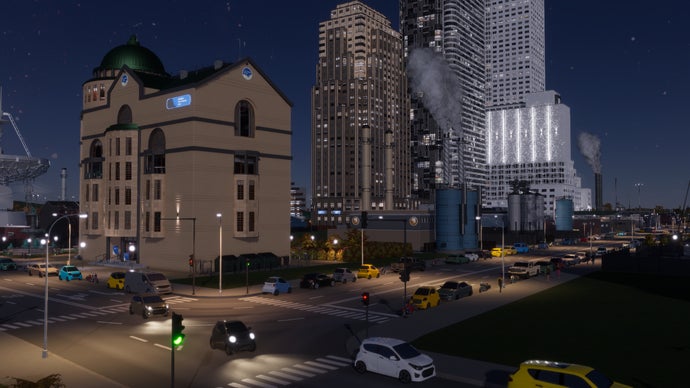
The development of *Cities: Skylines 2* has been a tumultuous journey marked by significant challenges and shifts, making it fair to scrutinize the project’s development as “incredibly messy.” Launched nearly three years ago, the game has struggled with various issues, which may reflect broader trends in the gaming industry. Recent insights from Mariina Hallikainen, CEO of Colossal Order—now the former developer—shed light on the underlying problems the team encountered during the game’s creation.
In an interview with *PC Gamer*, Hallikainen emphasized a critical miscalculation at the project’s outset, stating, “We completely overestimated the engine’s capabilities at the beginning of the project.” The development team had aimed to construct a game that would remain relevant and functional for potentially a decade post-launch. However, as they delved deeper into working with Unity, the development environment proved to be a source of frustration.
Hallikainen explained that many anticipated features of Unity did not perform as expected. This discrepancy forced Colossal Order to invest additional resources into either creating alternative solutions or compensating for shortcomings in the engine’s functionality. “We ended up in a situation in the development where we had to build much more things to either replace missing features or something that [wasn’t] working,” she lamented. This misalignment with Unity’s capabilities hindered the project and complicated the development process more than the team had initially anticipated.
Despite these setbacks, Hallikainen maintains a positive stance toward Unity itself, asserting that the collaborative efforts among Colossal Order, Paradox Interactive, and Unity were conducted with the intent to succeed. “What I absolutely want people to understand is that everyone at Colossal Order, Paradox, Unity, we all did the best we could under the circumstances,” she remarked.
Looking ahead, Colossal Order is gearing up for new projects, having confirmed that their next endeavor will also be a simulation game, made for PC using Unity. While this suggests a continuity of their partnership with the engine, it also raises questions about whether the challenges faced during *Cities: Skylines 2* development will inform their future approaches.
As the discussion surrounding *Cities: Skylines 2* unfolds, it stands as a case study of the complexities within game development—especially when navigating evolving technologies and the high expectations of both developers and players. The industry-wide issues reflected in this case serve as a reminder of the delicate balance between ambition and the practical limitations of available tools.