**Nvidia’s DLSS 5: An Industry in Disarray Over AI-Boosted Graphics**
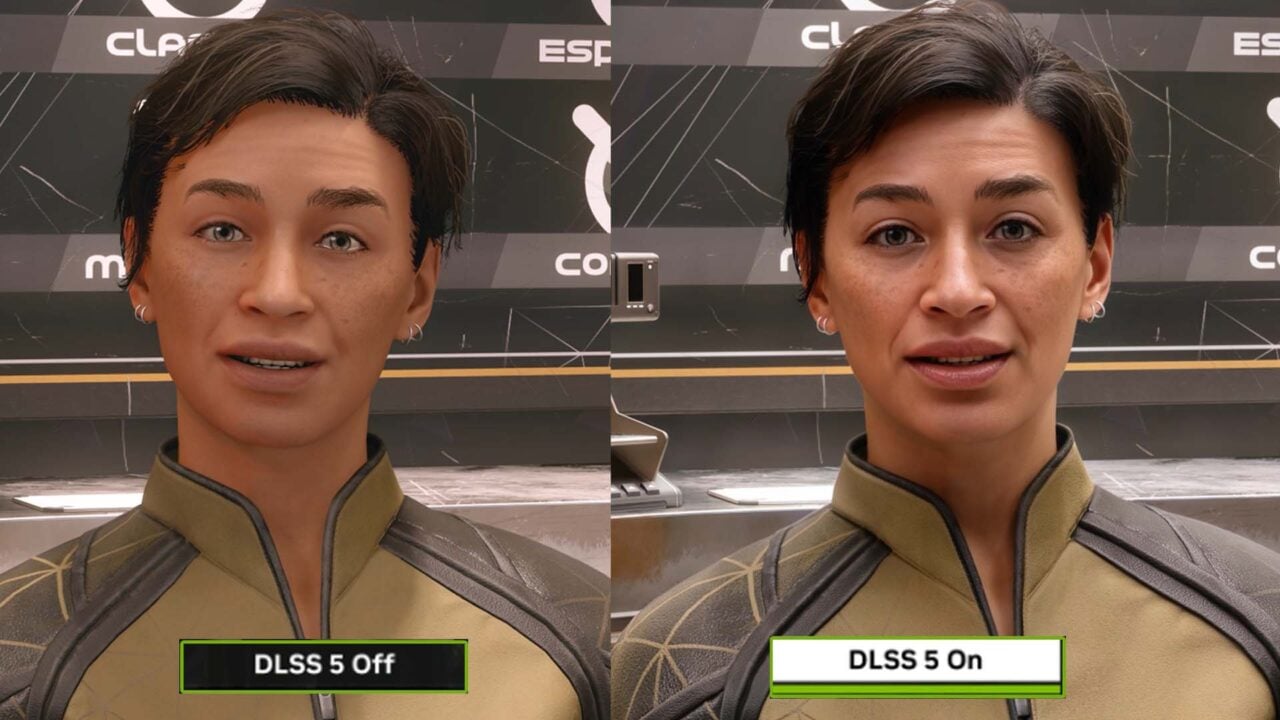
On Monday, Nvidia introduced DLSS 5, the newest version of its deep learning super sampling (DLSS) technology designed to enhance graphics quality and performance in gaming. Traditionally, this technology has been embraced by gamers and developers, who value its capacity to upscale resolutions and raise frame rates. Nevertheless, the reception of DLSS 5 has been notably adverse, met with widespread disapproval from both the gaming community and developers, particularly regarding what many label as “AI slop faces” and negative visual alterations in games like *Starfield*.
### Developer Outcry: Artistic Integrity at Stake
The response to DLSS 5 from game developers has been severe, with many voicing worries about how the technology impacts their creative visions. Cullen Dwyer, a gameplay and tech design lead at Doinksoft, expressed his dissatisfaction by highlighting a significant disconnect between gamers and Nvidia’s objectives. Dwyer emphasized that promoting DLSS 5 as a new benchmark is not only disrespectful but threatens the integrity of creative expression in gaming. His discontent echoes a mounting sentiment among developers who believe that AI advancements jeopardize artistic intent.
Andi Santagata, a former AAA game developer active in indie circles, noted that the implementation of DLSS 5 could dilute the distinct character of individuals by depending on generalized assumptions of how they “should” appear, undermining the intentional design decisions made by creators. This apprehension is shared by SolidPlasma, another developer who contends that the technology’s quest for heightened realism might unintentionally sanitize character designs and reduce their uniqueness.
An unidentified developer with significant AAA experience reflected these concerns, arguing that DLSS 5 undermines artistic cohesion and the creative intent of game developers. Similarly, artist Karla Ortiz criticized the technology as failing to respect the intentional artistic directions chosen by developers, contending that if developers wanted hyper-realistic aesthetics, they would have already sought them out.
### Nvidia’s Justification: A Misunderstood Innovation
In response to the escalating criticism, Nvidia CEO Jensen Huang defended DLSS 5 during a recent press briefing. Huang claimed that critics miss the point, emphasizing that the technology provides developers with manageable enhancements to geometry and textures via generative AI. He differentiated it from conventional generative AI, describing it as “neural rendering” that preserves developer control over content.
However, this assurance has not alleviated the increasing apprehension within the industry. Concerns about the technology’s ability to standardize video game visuals have been raised, with even the artists involved in the development of featured games reportedly taken aback by Nvidia’s announcement, discovering it simultaneously with the public.
### Who is DLSS 5 Intended For?
A recurring concern among developers is the ambiguity surrounding DLSS 5’s intended audience. Many wonder if average gamers will have the necessary hardware to utilize this technology, which could unintentionally lead to a gaming environment that favors those with high-end setups. Dwyer pointed out that such advancements might steer developers away from economically viable game creation, favoring low-poly indie projects that can operate on more accessible hardware. David Szymanski, creator of *Dusk* and *Iron Lung*, bluntly stated, “Nobody wants this,” reinforcing the view that DLSS 5’s radical alterations to visual artistry are unwelcome.
An anonymous developer contemplated the implications of DLSS 5, asserting that it dismantles the unified artistic experience of games, detracting from the intention behind each component. This perspective aligns with Rami Ismail, who argued that while earlier DLSS versions had their flaws, DLSS 5 does not address any meaningful requirement within the industry.
### The Emotional Impact on Aspiring Developers
The arrival of DLSS 5 has resulted in emotional consequences extending beyond veteran developers. A game development student shared feelings of despair upon realizing the technology’s potential implications. They expressed anguish over the possible decline of creativity and artistry in a field they are deeply passionate about, seeing DLSS 5 as emblematic of a broader, artless trend in technology—and a daunting future for the industry.
### Conclusion
As Nvidia continues to advance DLSS 5, the rift within the gaming community and the development industry is conspicuous. While aimed at boosting performance through state-of-the-art AI technologies, the backlash underscores significant worries regarding artistic integrity and the future of creative expression in gaming. As conversations persist, developers are left to navigate a shifting landscape where the boundary between innovation and artistic erosion becomes increasingly indistinct.