### Nvidia Introduces DLSS 5: A Divisive Advancement in Visual Upscaling Technology
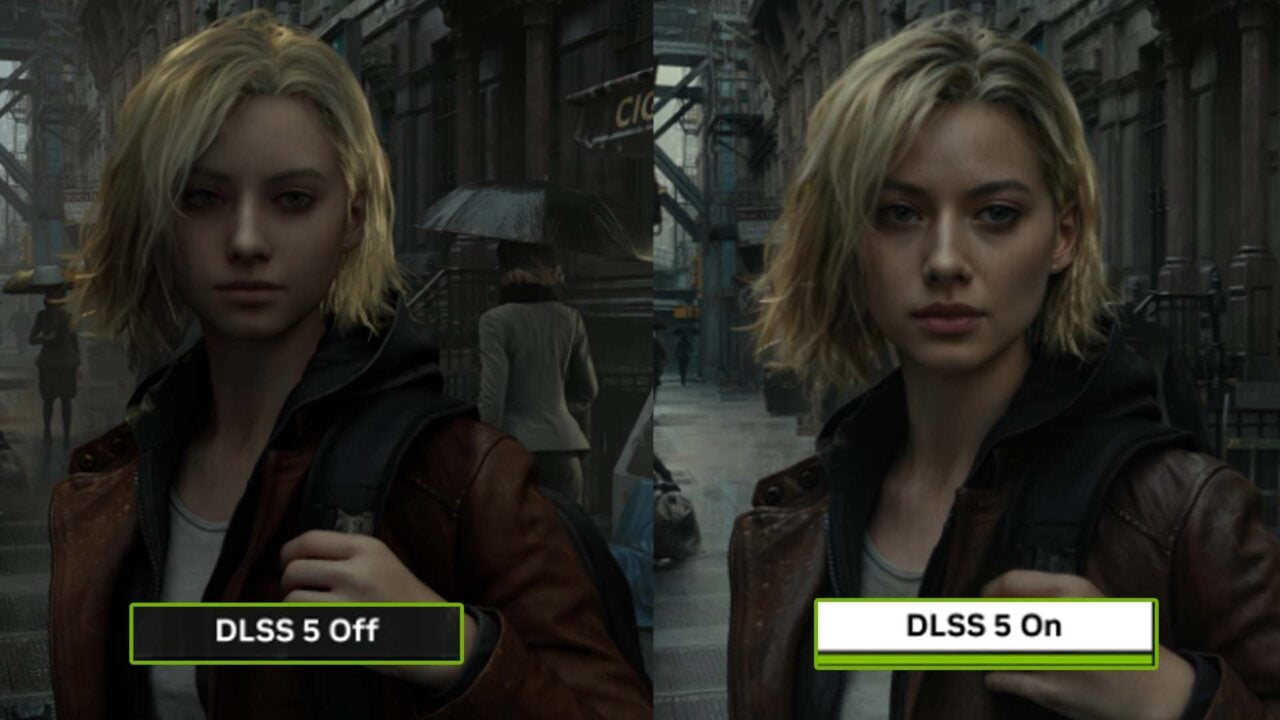
Earlier this week, Nvidia revealed the debut of DLSS 5, branding it as an “AI-driven innovation” in visual upscaling technology. This updated iteration of Deep Learning Super Sampling (DLSS) purports to utilize a game’s color and motion vectors as input for every frame, augmenting the visuals with lifelike lighting and material effects. Nevertheless, the response from online audiences has been largely unfavorable, with many dubbing the technology as an “AI-gen slop filter.”
In reaction to the criticism, Nvidia CEO Jensen Huang took to a live event to address the concerns, insisting that describing DLSS 5 as simply a post-processing effect is fundamentally erroneous. Huang asserted that the advancement is not just altering the visual output based on elementary data but involves sophisticated control over the game’s graphical characteristics. He explained that DLSS 5 utilizes “generative control at the geometry level,” differentiating it from conventional post-processing techniques.
Despite Huang’s passionate claims, new details shared by Nvidia’s “GeForce Evangelist,” Jacob Freeman, appear to contradict these assertions. When questioned if DLSS 5 employs a single 2D frame along with motion vectors to generate the output frame, Freeman acknowledged that it does — suggesting that DLSS 5 operates by analyzing a solitary frame to interpret complex scene components like characters, hair, fabric, and ambient lighting conditions.
This discrepancy raises significant concerns about the actual operation of DLSS 5. While Huang contends that the process incorporates comprehensive data, including 3D geometry, Freeman’s remarks suggest it largely depends on a single frame as a reference, thus resembling a generative AI filter rather than the more intricate rendering technology Huang advocates.
The variance in narrative has created confusion and frustration among gamers and industry analysts. For many, it seems that DLSS 5 may simply impose a filter over a snapshot, reinforcing the views of critics who argue that the technology doesn’t signify a substantial advancement. PC gaming YouTuber Daniel Owens summarized this apprehension, indicating that DLSS 5’s capabilities are being exaggerated and comparing it to the basic functions of standard generative AI filters.
Furthermore, skepticism regarding DLSS 5’s effectiveness has intensified the backlash following Nvidia’s initial demonstration, where some experienced lackluster lighting effects that appeared to mirror the technology’s limitations. With numerous users questioning whether DLSS 5 transcends the abilities of current AI solutions, accusations have surfaced online claiming that Huang has mischaracterized the technology’s potential.
As discussions about DLSS 5 progress, it remains uncertain if Nvidia can effectively address these issues and clarify the confusion surrounding the actual functionalities of their latest innovation. For the time being, the tech community observes closely, with opinions sharply divided on the future of generative AI in gaming graphics.