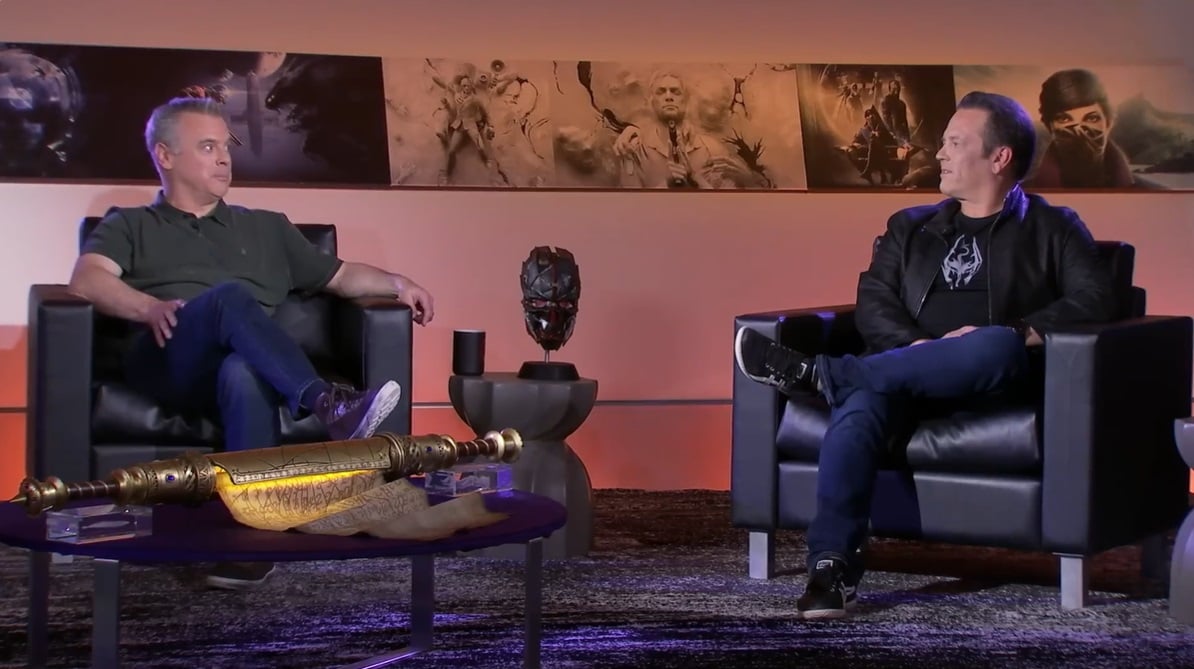
Pete Hines, who devoted 24 years to Bethesda as the VP of communications and marketing, revealed his retirement in 2023, shortly after the release of the highly awaited game *Starfield*. In a candid interview, Hines indicated that his choice to step down was shaped by his increasing feelings of helplessness following Microsoft’s purchase of Bethesda’s parent company, Zenimax, for $7.5 billion in 2021.
During the discussion with Kirk McKeand’s Firezide Chat newsletter, Hines conveyed his view that the merger with Microsoft resulted in a clash of values, rendering his position more difficult. He contemplated the dynamics of working under the tech behemoth without specifically naming Microsoft, suggesting a disconnection that hindered his capability to efficiently oversee Bethesda’s reputation and operations.
Hines voiced his anxiety regarding the company’s transformation after the acquisition, stating, “I had reached a point of yes, it needs me, and I am powerless to execute what I believe is necessary to manage this place appropriately.” He reminisced about Bethesda’s culture, stressing it was a studio recognized for being a competent and well-organized video game developer. His frustration grew as he observed a decline in the operational integrity he had once cherished, characterizing the experience of seeing the studio being “damaged” and “mistreated.”
Although he initially intended to resign sooner, Hines prolonged his tenure to manage the delayed launch of *Starfield*, which was initially scheduled for November 2022. His retirement coincided with crucial moments for Xbox, including the disappointing launch of the console exclusive *Redfall* and strategic changes with first-party titles, marking a turbulent phase for the platform.
Hines was also summoned to testify in the FTC trial regarding Microsoft’s acquisition of Activision Blizzard, where he expressed concerns about the repercussions of exclusivity for Bethesda games. He criticized the handling of *Call of Duty*, which was to remain multiplatform while other titles were restricted to Xbox, underlining frustrations with inconsistencies in Microsoft’s strategy for game releases.
The Bethesda veteran noted that the most disheartening part of his career was the disparity between his respect for the company and its operations once he became part of it. He conveyed a longing for authenticity in the company’s culture—something he believed had dwindled under new ownership. Hines expressed, “To talk is something, right? But I’m very much about: what is the follow-up to that? Do you mean what you say?”
As he prepared to depart from Bethesda, Hines did not identify the individuals or aspects within Microsoft that contributed to his disenchantment, although his feelings about the company’s trajectory echo a broader disquiet. He emphasized a commitment to genuine interaction and accountability that he felt had been undermined, concluding that Bethesda was now affiliated with an entity that lacked authenticity and sincerity.
In summary, Pete Hines’ exit from Bethesda signals the conclusion of an era for a company celebrated for producing iconic titles like *Fallout* and *The Elder Scrolls*. His reflections offer a glimpse into the challenges encountered by gaming firms after acquisitions and the complexities of sustaining a cohesive culture within larger corporate frameworks.