**Wizards of the Coast Responds to Plagiarism Claims in The One Ring Artwork for The Hobbit Set**
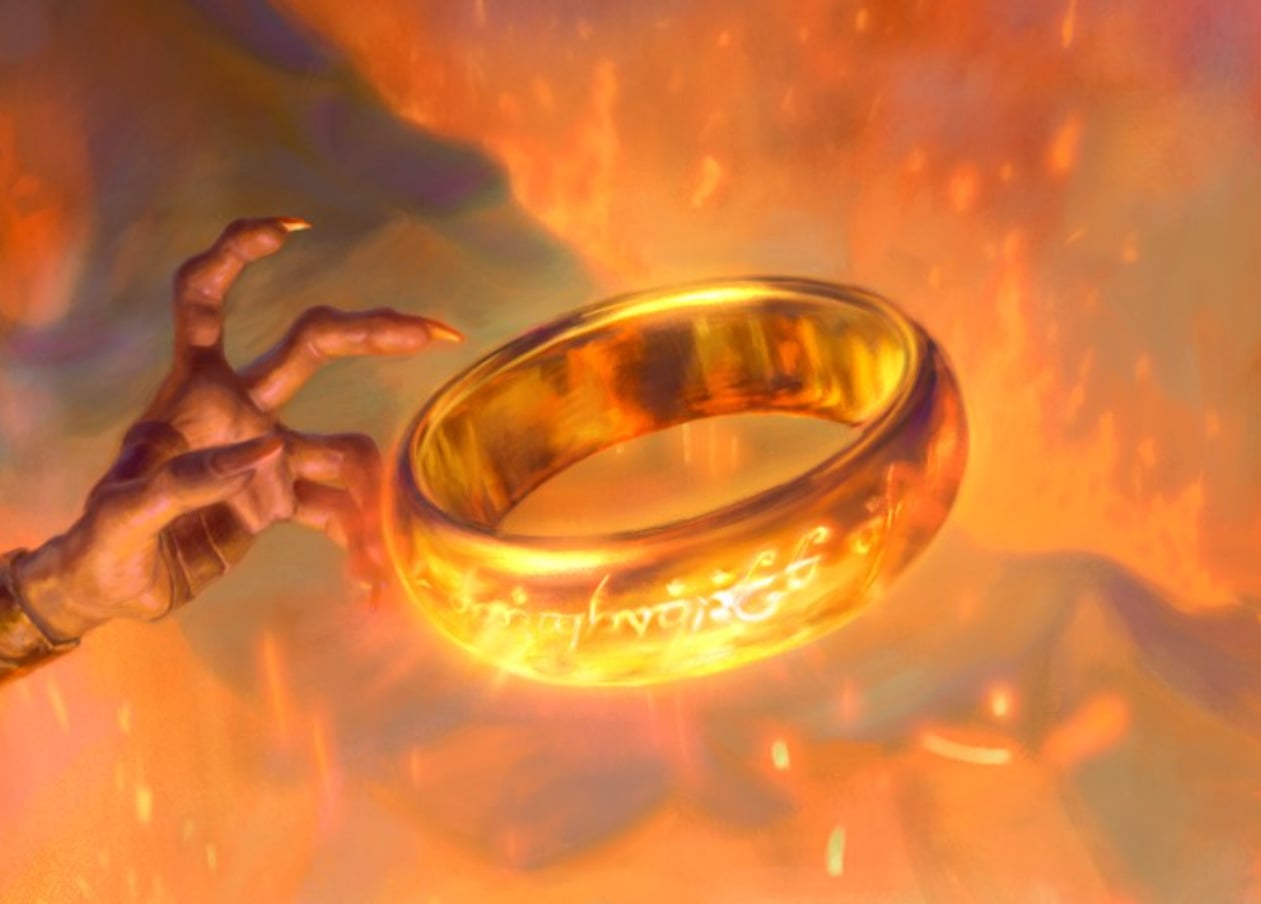
Following days of intense discussion among the community, Wizards of the Coast has released a statement affirming that the recently unveiled artwork for The One Ring, crafted by renowned Magic: The Gathering (MtG) artist Dan Frazier, was “regrettably” copied from fellow artist Marta Neal. This artwork is scheduled to be featured in the forthcoming Magic: The Gathering set titled The Hobbit (Universes Beyond).
The dispute gained momentum as fans and artists exchanged insights online, particularly emphasized in a discussion on the r/magicTCG subreddit. When juxtaposing the two artworks, the similarities were unmistakable, prompting extensive examination. Frazier’s artwork, which is part of the new set, closely mirrors Neal’s rendition from the earlier released Tales of Middle-earth set. Notably, when reversed, some of the runic features from Neal’s art can still be identified in Frazier’s work.
Both Frazier and Neal have a long-standing affiliation with Wizards of the Coast, but Frazier is especially recognized for his foundational impact on the game, having been involved in the very first MtG set, Limited Edition Alpha, launched in 1993. His legendary pieces include prominent cards such as Ring of Ma’rûf, Berserk, and the original iterations of Swamp, along with all original Mox and Signet cards. In light of Frazier’s legacy, many fans were initially led to believe that any similarity between the artworks was accidental rather than intentional.
The situation intensified when Frazier’s representative addressed a Facebook comment made by fellow artist Donato Giancola. The agent referenced alterations made during the creation process that the team had not been informed of. However, Wizards of the Coast and Frazier later shared a joint statement on social media acknowledging that the similarities were, in fact, intentional, but not in a way that was authorized.
Frazier candidly accepted responsibility for the mistake, saying, “I made a mistake, and I feel terrible. I particularly empathize with Marta, whose work I admire. In attempting to create an iconic version of The One Ring, while relying on online references, I inadvertently used Marta’s Ring as a reference and painted over it to try to portray the item that fans cherish. In doing so, I didn’t make it distinctively mine. I’m reaching out to Marta privately to apologize as a fellow artist.”
While the plagiarism allegations were significant, Wizards of the Coast clarified that Frazier’s actions were not intentional. They committed to compensating Neal for her contributions and ensuring she receives credit on the digital versions of The One Ring card. The statement wrapped up with appreciation for the attentive fans who highlighted the issue and stressed the necessity of supporting artists and their work.
Wizards of the Coast also reiterated their ongoing admiration for Frazier’s skills, acknowledging that errors occur while emphasizing accountability. They recognized both Frazier’s misstep and the company’s faults in their oversight protocols, reaffirming their dedication to the integrity of artistic contributions within the game.
This incident acts as an important reminder of the ethical standards expected in creative industries and underscores the significance of recognizing and honoring original artistry in all its forms.