### Takashi Tezuka: A Heritage of Innovation at Nintendo
Earlier this week, Takashi Tezuka, a veteran producer and executive officer at Nintendo, declared his retirement from the legendary gaming company. His career, which commenced in the mid-1980s, has made a lasting impact on the video game sector, contributing to several of the most crucial titles in gaming history, including *Super Mario Bros.*, *The Legend of Zelda*, and *Animal Crossing*. Among his many accomplishments, Tezuka is especially esteemed for his work on *Link’s Awakening*, a game frequently credited with guiding the Zelda franchise toward richer storytelling and gameplay advancements.
#### Early Career
Tezuka’s connection with Nintendo began after he finished art school, where he submitted an application for a role alongside a friend. While his friend was not chosen, Tezuka was accepted into Nintendo, despite having minimal prior exposure to video games. His influences leaned more toward art and cinema than arcade gaming; he has even mentioned that he had never heard of *Pac-Man* before joining the firm.
This outsider viewpoint became Tezuka’s unique advantage at Nintendo. He injected creative ideas such as the Boos in *Super Mario Bros. 3* and Yoshi in *Super Mario World*. As the director of *The Legend of Zelda: Link to the Past*, Tezuka introduced new dimensions and dynamics to the classic franchise, which was celebrated for its immersive world design and enchanting melodies.
#### Breakthrough with Link’s Awakening
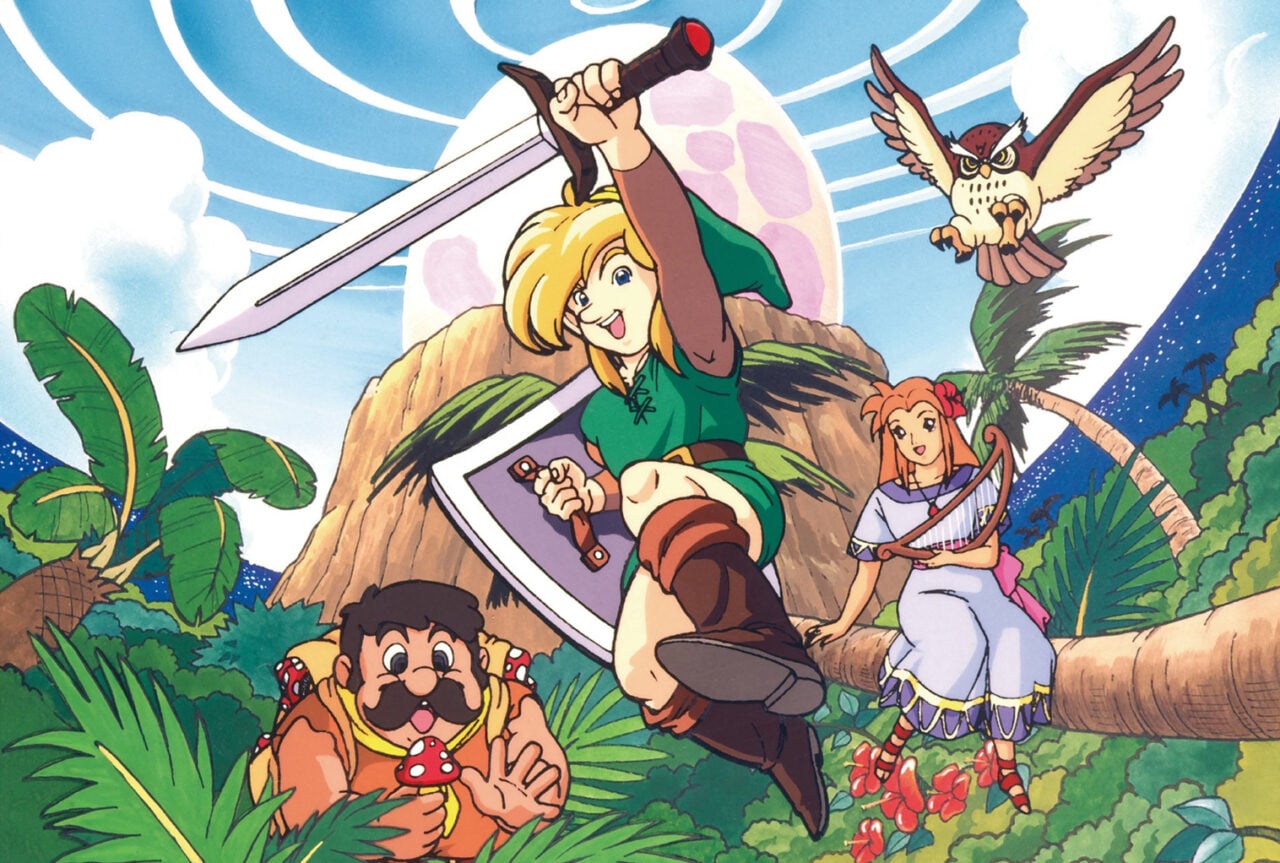
While *Link to the Past* adhered to a relatively conventional sword-and-sorcery plot, *Link’s Awakening*, Nintendo’s inaugural handheld Zelda game, marked a substantial change. Originally planned as a direct remake of its predecessor, the development team ultimately experimented with the Game Boy’s capabilities, evolving the game into something distinctive. Tezuka directed his team to imagine a Zelda title that deviated from familiar components: it lacked the Triforce, Hyrule, or even Princess Zelda herself.
In an episode of Iwata Asks, Tezuka disclosed that the creative vision for *Link’s Awakening* was drawn from David Lynch’s television series *Twin Peaks*, which was a significant hit at the time. He sought to create a small, easily digestible game world populated with unique characters and unconventional stories. Producer Eiji Aonuma highlighted that Tezuka envisioned the residents of Koholint Island as quirky and mistrustful, adding layers of fascination to the gameplay.
The stakes in *Link’s Awakening* exceeded the ordinary mission to defeat evil; the game’s plot centered on repairing a disrupted reality. The triumph of *Link’s Awakening* established a benchmark for upcoming Zelda installments, with its quirky, arthouse components shaping the design and storytelling of later games, including the revolutionary *Ocarina of Time*.
#### Lasting Impact
Tezuka’s inventive contributions have left an undeniable mark on the Zelda series. His knack for expanding the boundaries of what was allowed in the franchise introduced new characters and narratives that emphasized depth and nuance over traditional high-fantasy clichés. As Iwata remarked, “Tezuka-san, you broadened what was permissible for Zelda without even realizing it.”
With his retirement, Takashi Tezuka departs leaving a legacy characterized by bold creativity and a readiness to challenge limits, ensuring that the games he contributed to will keep captivating and inspiring countless players for years to come. His progression from an art school graduate with limited gaming experience to a pivotal architect of some of the most cherished titles in video game history illustrates the strength of innovation and determination in the industry.