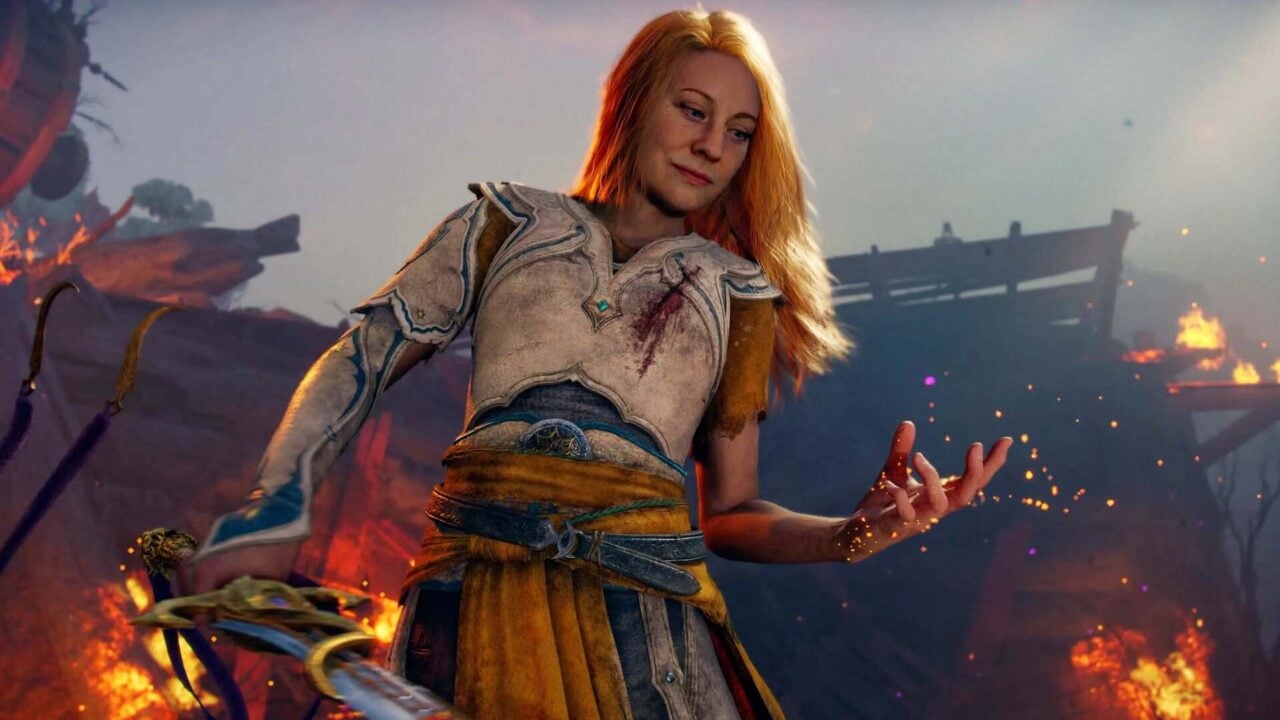
**Investigating the Anticipation for God of War: Laufey**
The gaming community is buzzing with enthusiasm for the upcoming title, *God of War: Laufey*. Building on the achievements of its predecessor, *God of War (2018)*, this new chapter is anticipated to further enrich the lore and character development within the franchise. While humor and memes surrounding Faye’s air-juggling antics mixed with poignant moments of grief are circulating, it’s crucial to engage in a constructive discourse about what *Laufey* might represent for players and fans alike.
A major concern voiced by fans is the potential ongoing presence of Kratos in *Laufey*. Although he briefly appeared in the gameplay trailer revealed during PlayStation’s State of Play event, many are optimistic for a narrative pivot that primarily centers on Faye. Traditionally, the *God of War* series has faced scrutiny for its depiction of female characters, often relegating them to roles that end in their demise, frequently at Kratos’ own hand. This trend has led to the introduction of more developed female characters such as Freya, Angrboda, and Thrúd, who play a significant role in the story.
Faye serves as a crucial character in this new narrative landscape. With her own background and agency, she breaks away from the trope of passive female characters, offering an opportunity for rich storytelling. The chance to explore her character’s ambitions and motivations apart from her connection with Kratos could transform the series’ approach to female representation. An intrusive Kratos, even as a passive presence, could eclipse Faye’s growth and the agency she embodies.
The recent narrative developments in *God of War* have focused on Kratos confronting his violent past and its implications for his role as a father. With *Ragnarok* providing a fitting resolution to this arc, *Laufey* seems poised to delve into the lives of those affected by Kratos’ actions and legacy, particularly Faye’s narrative. For the narrative impact to resonate, it is vital that Faye’s journey unfolds independently from Kratos, allowing her to excel in her own right.
Furthermore, the possibility for a rich conversation between Kratos’ two wives offers an enticing narrative opportunity. The *God of War* series possesses a unique ability to bridge the divide between the living and the deceased, yet it has seldom explored the emotional intricacies of Kratos’ past relationships. A dialogue between Faye and Kratos’ first wife could yield profound insights and add layers to the overarching narrative. Such exchanges could showcase themes of forgiveness, understanding, and the repercussions of Kratos’ former actions, enhancing the storytelling experience.
In conclusion, the anticipation surrounding *God of War: Laufey* is not merely about its gameplay or visuals but the potential it offers for evolving character narratives. By allowing Faye to take the spotlight, the series can make significant progress in addressing past criticisms regarding female character representation. Additionally, exploring the crossroads of Kratos’ past with Faye’s journey could unveil new pathways for emotional storytelling, leading to a more nuanced exploration of redemption and legacy. The excitement is palpable, and the community observes closely as *Laufey* nears its release, eager to see how these themes will be expressed in the game.