# The Evolution of Spore: An Oral History
## Introduction
Spore, a groundbreaking life simulation game, is often perceived as an entity that seamlessly installs itself on players’ computers, transcending the boundaries of a typical video game. However, beneath its unique premise lies the creative vision of Will Wright, the mastermind behind The Sims, alongside a dedicated team at Maxis.
## The Conceptual Foundations
The initial spark for Spore emerged from Wright’s fascination with the documentary “Powers of 10,” which presents a fascinating perspective by zooming in and out across vast scales of the universe. According to designer and lead engineer Chris Hecker, this documentary served as a foundational framework for Spore’s gameplay mechanics. Wright noted the influence of various scientific principles, such as the anthropic and Copernican principles, while also aiming to honor multiple video game genres throughout the game’s evolution.
## Genre Fusion and Challenges
Wright envisioned Spore as a fusion of several successful video game genres, from the arcade classic Pac-Man to first-person shooters, real-time strategy (RTS) games, and expansive 4X space exploration titles. As Hecker humorously remarked, the ambitious idea was to “take the best video games ever and smash them all into one.” This ambitious crossover presented a myriad of design challenges, ultimately resulting in an experience that felt disjointed to many players. Wright himself acknowledged this critique, admitting that Spore felt like “five separate games that were kind of stuck together.”
## The Creature Creator: A Design Endeavor
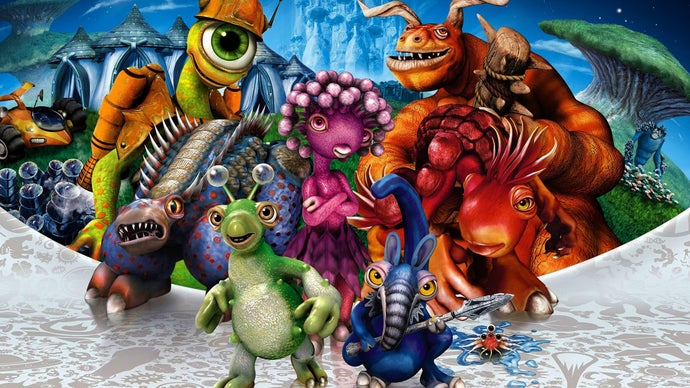
One of the standout features of Spore was its creature creation tool, allowing players to design their own unique beings. This area of development was particularly challenging. Designer Chaim Gingold reminisced about the collaboration with animator John Cimino. The objective was to simplify creature creation while avoiding an overly simplistic approach. The comparison to Mr. Potato Head, used to illustrate ease of design, proved controversial among the team, with some members feeling it undermined the game’s complexity and depth.
## Balancing Complexity and Accessibility
The development team realized that creating a creature that looked and moved naturally required sophisticated professional tools, usually accessible only after extensive training. However, the team sought to achieve this in real-time, ensuring that players could manipulate their creatures dynamically as they designed them. Hecker acknowledged the balance they needed to find: making the creation process intuitively accessible without sacrificing depth.
## Legacy and Reflection
Despite the mixed reception, the charm of the creature creator persists, embodying both simplicity and complexity. Even if Spore did not deliver a flawless gaming experience, its ambitious design and conceptual innovation were pivotal to its legacy. The oral history from Design Room sheds light on the intricacies of development, revealing the myriad challenges faced by the team, while emphasizing the influence of the Powers of 10 and the game’s genre-spanning aspirations.
In summary, the story of Spore is a fascinating glimpse into the ambition and creativity of game development, highlighting the team behind its creation and the complexities that arise when intertwining multiple gaming experiences.