**Assassin’s Creed Black Flag Resynced Review**
Assassin’s Creed Black Flag Resynced retains the hallmark pirate gameplay of the original while infusing aspects of the newer Assassin’s Creed titles. Developed and published by Ubisoft, the game released on July 9, 2026, for Windows platforms and is priced at £49.99/€59.99/$59.99. The review was conducted on a system with an Intel Core i7-12700F, 16GB RAM, and an Nvidia RTX 3060 Ti, running Windows 11.
The game captures the exhilarating experience of naval battles, as players shout commands to crew members and navigate through oceanic warfare. It builds on the legacy of the original Assassin’s Creed 4: Black Flag, regarded as the pinnacle of pirate-themed gaming due to its mix of maritime combat and exploration. The game’s protagonist, Edward Kenway, embodies a chaotic relationship with the Assassin’s Creed philosophy, aiming more for treasure than ideological correctness.
The storyline follows Kenway as he navigates personal relationships and the value of connection over the pursuit of wealth. The developers have introduced new epilogue missions that emphasize this theme, although some critiques exist around the decision to replace the original DLC, Freedom Cry, with similar content in the epilogue.
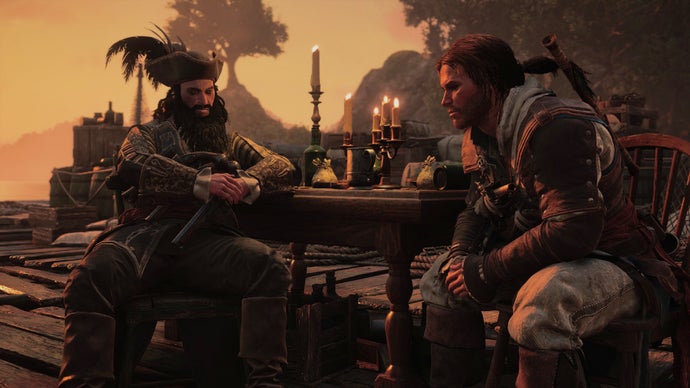
The addition of three new officers to Kenway’s ship—notably Padre, Lucy Baldwin, and Deadman Smith—brings a lively aspect to the crew and enhances the gameplay with distinct abilities that aid in combat. Moreover, the game introduces standalone side quests that flesh out the narrative involving historical figures like Blackbeard.
The gameplay mechanics include the introduction of Rifts, which replace the dull modern-day sequences with optional historical explorations within pocket dimensions, maintaining a more consistent pacing throughout the primary storyline. However, the removal of lengthy stealth sections can disrupt the flow, and the absence of instant-fail conditions during stealth creates issues with pacing and challenge.
Combat evolves from the original’s format, focusing on timed parrying and introducing a more methodical approach to battles. While the combat feels smoother, some interactions may lack the satisfying weight of earlier iterations. The navies’ naval battles introduce new weapons like flaming broadside cannonballs, elevating the thrill of maritime confrontations.
The revamp of Kenway’s Fleet mini-game restricts players to specific Caribbean regions and limits ship missions based on the vessel types, which some players may find frustrating compared to the flexibility offered in the original. The mission structuring has also drawn criticism for forcing players to capture more advanced ships to access certain tasks.
In summary, Assassin’s Creed Black Flag Resynced excels when focusing on naval adventures and combat. While it presents a mixed bag of additions and changes, it remains a potent experience for fans, intertwining engaging pirate escapades with the Assassin’s Creed narrative. The game successfully retains its predecessor’s core, ensuring that players still revel in being a swashbuckling adventurer navigating the high seas.