**The Artistic Philosophy Behind Slay the Spire 2’s Placeholder Art**
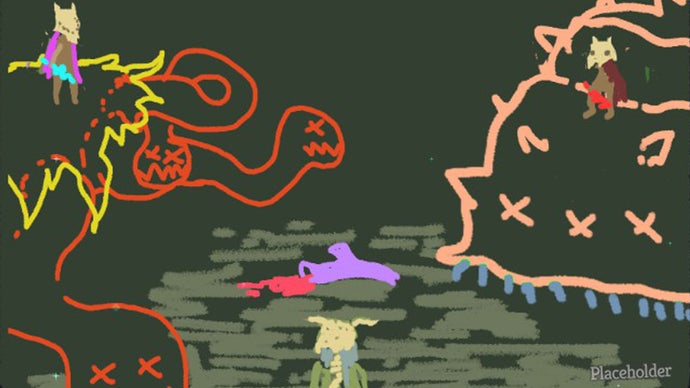
The early access version of *Slay the Spire 2* has stirred conversations among players, particularly regarding its intentionally simplistic placeholder art. This design choice by Mega Crit co-founder Casey Yano has sparked interest and debate, revealing deeper insights into the game development process and the philosophy behind using unfinished art.
During an interview with GameSpot, Yano explained that the rudimentary art, reminiscent of MS Paint creations, serves a significant purpose. He emphasizes, “I wanted to set the precedent that some of the stuff is incomplete, and I wanted to make it obvious.” This decision aligns with an important aspect of early access: the acknowledgment that the game is still in development, and its elements are subject to change.
Yano acknowledges that while the art team could have produced more polished visuals, he was consciously aware that much of their work would consist of what he describes as “drawing a bunch of garbage” during the early stages. He believes that if the placeholder art appeared nearly finished, players may mistakenly assume it would represent the final product. Thus, the aesthetic choice to use “shit” art becomes a tool to manage player expectations.
In an era where many early access titles are expected to deliver a certain level of polish, Yano’s approach is refreshing. It rejects the notion that early access games must present a veneer of completion. Instead, it invites players to engage with the game as a work in progress, fostering an environment where feedback and iteration are integral to the development process.
Moreover, Yano’s insights extend to a critique of the growing reliance on AI-generated art in game development. He expresses concern that players and artists alike might feel a sense of loss when artwork lacks a clear creative journey. “You don’t see the path that somebody took to get better and develop their own style,” Yano asserts. He underscores the importance of authenticity in art, highlighting that, in *Slay the Spire 2*, the game’s aesthetic is deeply rooted in the developers’ unique style, making the use of AI unnecessary.
The conversation around placeholder art in *Slay the Spire 2* has broader implications for the gaming industry. Yano’s perspective advocates for transparency and authenticity in the development process, challenging conventional expectations of early access titles. By embracing imperfection, the team at Mega Crit not only sets realistic expectations for players but also champions the artistry inherent in game development.
In conclusion, Yano’s philosophy on using intentionally crude placeholder art in *Slay the Spire 2* is a bold statement against the norms of early access games and AI-generated content. It encourages a deeper appreciation for the creative process and reaffirms the importance of human artistry in gaming. As developers continue to navigate the complexities of game creation, *Slay the Spire 2* serves as a potent reminder of the value of authenticity and the journey of artistic development.