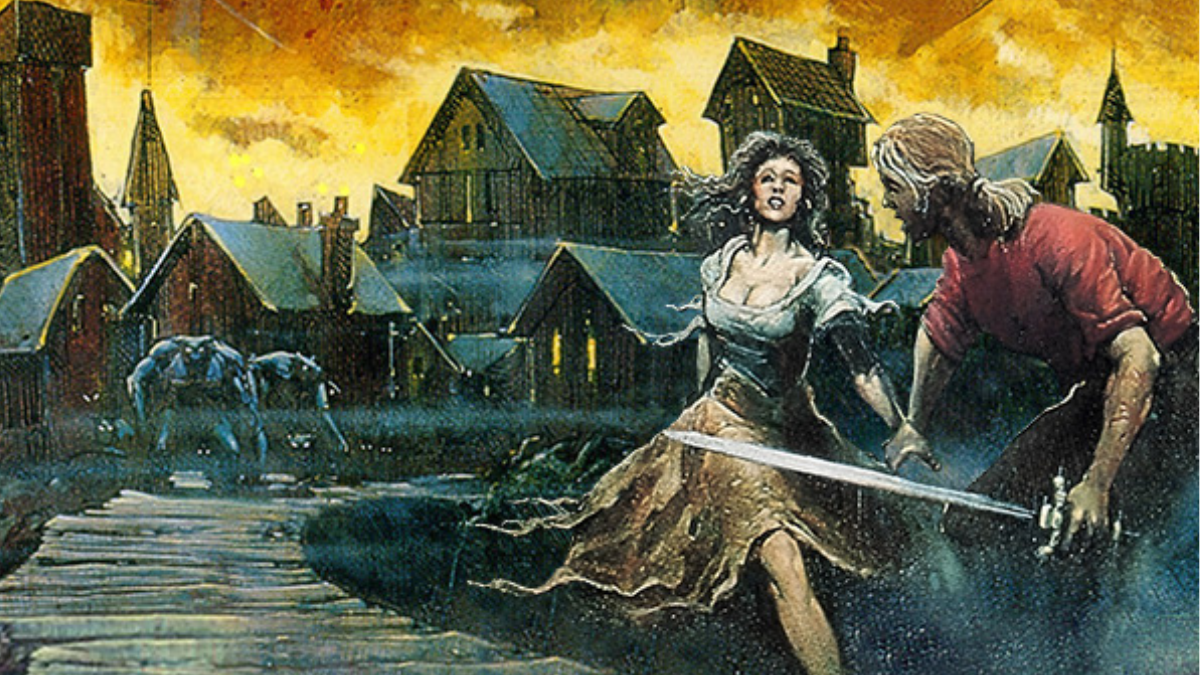
If you merely flipped through a PC gaming publication during the mid ’90s, you might recognize the title Ecstatica. Developed by Londoner Andrew Spencer and published by Psygnosis, the franchise produced two entries: the initial one published in 1994, depicting a medieval-themed survival horror. The follow-up released in 1997, and while it obviously retains the Ecstatica feel due to its artistic approach, it toned down the horror aspects considerably.
That artistic approach is quite essential: instead of using polygon-based character models, Ecstatica’s engine employed ellipsoids, which are, in essence, somewhat spherical. Bulbous, to be precise. Rather than rephrase the formula-laden Wikipedia entry for ellipsoids, it’s likely more straightforward to illustrate this:
[Image: SNEG]
This art style is notably unique, and famously, Andrew Spencer developed the engine from the ground up. The ellipsoids are indeed genuine: other titles that share a similar artistic style, such as Little Big Adventure, apply Gouraud shading to produce the illusion of softness where there are actually hard angles.
As Spencer remarked to Next Generation in 1996: “The primary benefit is the organic appearance of the characters. Triangles often create rigid, robotic-looking shapes, while ellipsoids can be utilized to craft more curvaceous, human-like figures. Moreover, ellipsoids can be more efficient since you can design a more visually appealing character with fewer shapes.”
I doubt many would label the characters in Ecstatica as “organic-looking” from the perspective of 2026, but I do recall being amazed by the visuals of these games in static magazine captures. Compared to titles like Alone in the Dark, it seemed like a noticeable improvement, even if in practice it was more of a sidestep.
Finding Ecstatica and its sequel online is likely straightforward, but they haven’t been commercially accessible for years. That’s set to change: they’re part of a new wave of SNEG reissues, which also features the 2001 Dungeons & Dragons RPG Pool of Radiance: Ruins of Myth Drannor, the 1997 3D action title Dark Earth, the 2001 turn-based strategy game Warlords 4, and the 1998 military tactics simulator Soldiers at War.
Naturally, similar to the vast majority of early ’90s PC horror, Ecstatica will likely feel rigid and unwieldy to most contemporary players. Like Resident Evil and Alone in the Dark, both titles employ tank controls, and their 3D environments are seen from fixed camera angles. Both also rely on puzzle-solving and humorous instant death moments. Nonetheless, I think the occasional frustration is worthwhile just to witness the still-beautiful ellipsoid art in action.
Ecstatica and Ecstatica 2 are set to arrive on Steam and GOG later this year. For further information, check out Richard Cobbett’s take on the original Ecstatica.