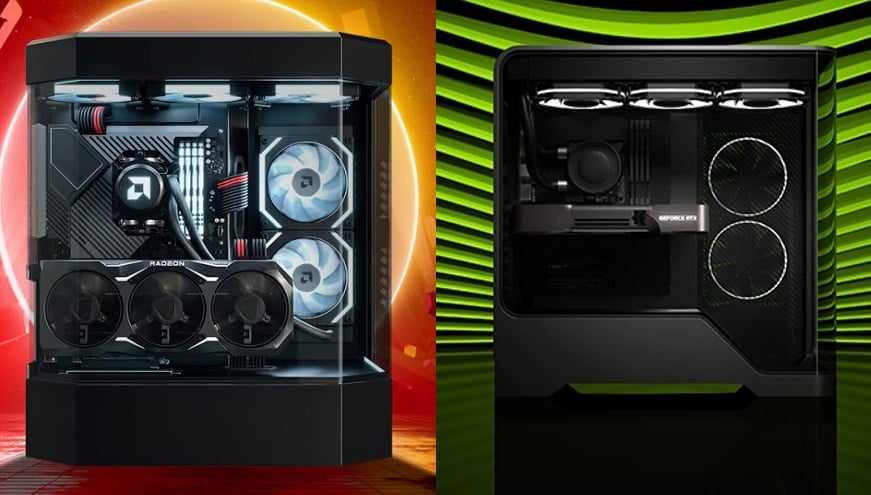
## The Present Condition of GPU Pricing and Its Consequences for Gamers
As the gaming community seeks to upgrade or assemble new gaming PCs, the existing scenario of graphics card pricing poses significant obstacles. In recent years, GPU prices have escalated beyond the means of many enthusiasts and gamers, and the situation seems ready to deteriorate further due to a combination of industry pressures, especially in light of the heightened demand driven by AI innovations.
### The Increasing Prices
Recent news suggests that Nvidia, a leading entity in the graphics card sector, is executing a considerable price increase, upping costs to manufacturers such as MSI and Asus by as much as 30%. This rise could represent one of the most notable spikes in GPU prices this year, causing consumers to be concerned about their budgets. While the extent to which this price rise will impact end users remains uncertain, the consequences are significant.
Moreover, AMD, recognized for providing competitive options to Nvidia, is also speculated to follow this trend with a more modest price increment of approximately 10%. Industry experts believe that AMD has been strategically holding off to see Nvidia’s price adjustments before making its own announcements, indicating a more reactive than proactive stance on pricing.
### Market Evolution
The pricing patterns reflect broader market dynamics at work. The Radeon RX 9070 XT, originally launched at an MSRP of $600, is now reported to be listed for $700 to $750 on sites like Newegg. This pricing still proves to be somewhat relieving compared to Nvidia’s GeForce RTX 5070 Ti, which, while initially set at $750, has swelled to around $1,000. This scenario creates a stark contrast, highlighting that while AMD continues to be the more budget-friendly option, its pricing structures are beginning to approach Nvidia’s, essentially driving consumers toward higher spending.
The rise in GPU prices is further intensified by “RAMageddon,” a term that underscores the acute shortage and escalating costs related to RAM. Consequently, gamers opting for AMD products may find themselves facing Nvidia-like prices, whereas those considering Nvidia cards encounter costs nearly double that of AMD’s entry-level offerings from a year ago.
### The Comeback of Budget Options
Curiously, this economic strain has led to a comeback of low-end GPUs, with AMD recently releasing the RX 9050, which includes a version with only 4GB of VRAM, marketed at just $280. This shift towards lower memory solutions raises alarms among gamers, as contemporary games frequently struggle with performance on systems equipped with lower VRAM, particularly at 1080p resolutions.
Digital Foundry has noted that this situation is concerning, especially since consumers are now being presented with budget-class cards containing substantially less memory than those previously available, questioning the practicality of such a product in today’s gaming landscape.
### Conclusion: What Lies Ahead?
At this juncture, potential purchasers may be mulling over their forthcoming actions in light of the rising prices and unpredictable market climate. The recommendation appears to be to exercise patience—waiting out the upheaval in the GPU market might be the wisest strategy, potentially postponing purchases for up to two years. This timeframe could allow the market to settle and bring prices back to a more acceptable range.
Ultimately, the GPU landscape continues to be fraught with difficulties as companies maneuver through the pressing demands of AI and an increasingly competitive arena. For the time being, gamers may need to hold steady, hoping for a recovery in the industry that brings prices down to more manageable figures.