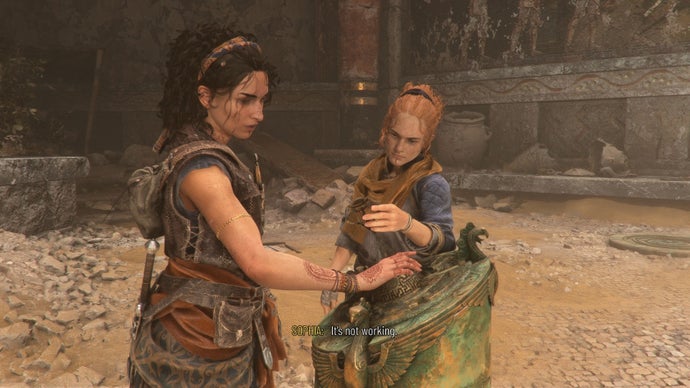
# Resonance: A Plague Tale Legacy – A Combat-Focused Spinoff
**Developer:** Asobo Studio
**Publisher:** Focus Entertainment
**Release Date:** August 27th, 2026
**Platforms:** Windows 10 and up
**Price:** £49.99
**Reviewed on:** Intel Core i7-8700, 16GB RAM, Nvidia GeForce GTX 1070, Windows 11
[Available on Steam](https://store.steampowered.com/app/2713000/Resonance_A_Plague_Tale_Legacy/)
## Introduction
In a series that masterfully juxtaposes themes of light and dark, *Resonance: A Plague Tale Legacy* diverges from its predecessors as a combat-focused spinoff. Developer Asobo Studio seeks to carve its own identity by shedding familiar elements of the Plague Tale franchise, introducing players to new characters and gameplay styles, while exploring Sophia’s backstory long before her encounter with Amicia and Hugo.
## Plot Overview
Set 16 years prior to the events of the last game, players step into the shoes of Sophia, who was kidnapped by the Inquisition and endowed with visions that lead her to a mysterious island. As the narrative unfolds, players learn about her father’s demise in his quest for treasure and a cure for Sophia’s ominous dreams. The game intricately weaves Sophia’s frustrations and development, particularly her relationship with Faro, her father’s successor and smuggler leader.
## Shift in Gameplay Mechanics
One of the most stark departures from previous entries is the shift from stealth to combat. Unlike the original Plague Tale games, which encouraged players to avoid confrontation, *Resonance* focuses on direct engagement. As players progress, they equip Sophia with combat skills, allowing her to wield swords and knives, parry, dodge, and take down enemies in a scrappy melee style. This combat-centric approach marks a significant shift in how players interact with enemies and the game environment.
## Exploration and Environmental Design
The game is set against the backdrop of a fantastical island filled with challenges, puzzles, and mysterious lore. However, Asobo’s ambition to create an exploratory environment is constrained by its linear structure, often limiting players to a designated path. Attempts at encouraging exploration through hidden “Resonance points” and artifacts are undermined by the static nature of off-path areas, leading to a disconnect between the gameplay experience and exploration incentives.
## Narrative Conflicts
The combat-driven design presents narrative contradictions, particularly concerning Sophia’s visions and the progression of her story. Despite the emphasis on her unique journey, the constant presence of soldiers undermines her significance. Players frequently encounter soldiers immediately after solving puzzles, diluting the narrative tension and leading to moments where Sophia’s role feels more akin to a combatant than a pivotal character in the story.
## Absence of Series Hallmarks
Perhaps the boldest decision made by Asobo in *Resonance* is the complete omission of the iconic rat swarms that defined the previous games. While the first two Plague Tale titles used the unsettling presence of rats as a gameplay mechanic and narrative device, *Resonance* struggles to find a similarly captivating antagonist. Instead, players face a new enemy that, while menacing, does not evoke the same visceral horror associated with the rats.
## Conclusion
While *Resonance: A Plague Tale Legacy* offers a compelling action experience, it ultimately dilutes the distinctiveness that characterized its predecessors. The embrace of combat over stealth, coupled with narrative inconsistencies and the absence of beloved game elements, leaves players with a well-crafted yet less memorable title. Asobo Studio has demonstrated competence in creating an engaging action game, but in its quest for innovation, it risks losing the essence that made the original Plague Tale games resonate with players.