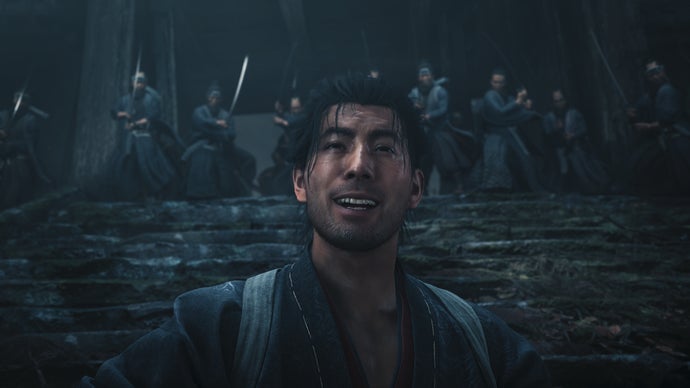
### The Shenanigans of Musashi: A Look at Onimusha: Way of the Sword
The opening moments of *Onimusha: Way of the Sword* set an exuberantly chaotic tone that catapults players into a world where humor and action intertwine. Players are introduced to wandering ronin Musashi, who comically emerges from under a bridge, exclaiming a British “WOT?!” at a group of hungry children eyeing his rice ball. This playful sequence sees him dashed around a village, pursued by a throng of martial arts students, obliviously kicking a wooden plank at them and rescuing a dog in peril. This introduction effectively distinguishes the game from its more serious counterparts in the fantasy slasher genre, showcasing its quirky charm.
However, as players delve deeper into the game, the once vibrant energy present in the introduction seems to wane. Initial impressions reveal a tonal inconsistency as *Way of the Sword* shifts between various themes—ranging from the bleakness of feudal horror to the over-the-top invincibility of a shonen manga hero. At times, the game falls into silence as players navigate map markers through Kyoto, potentially losing some of the allure established in the opening act.
Despite these fluctuations, *Way of the Sword* stands out as a well-crafted action-adventure game, boasting a robust combat system that features one of the smoothest sword-deflecting mechanics in recent gaming history. Players will find themselves engaged in reactive, physical battles—where redirecting charging enemies can lead to comedic moments and spontaneous destruction. The combat retains a humorous edge; from flinging adversaries into walls to utilizing various environmental props, even the fighting aspect has its lighter, entertaining moments.
One of the delightful aspects of the game lies in its engagement with Jackie Chan-inspired prop-fu. Players can use scattered items like boards, carts, and barrels as makeshift weapons, evoking a sense of amusement juxtaposed with the serious tone of a samurai’s journey. Unfortunately, this inventive combat style, akin to Cel-shaded antics, is not presented frequently enough throughout the game, leading to fewer memorable encounters compared to those scripted sword duels.
Moreover, the game’s pacing suffers from an overabundance of cutscenes and dialogue, which, while occasionally humorous, can disrupt the momentum established early on. The semi-open-world design of Kyoto adds complexity but often hinders fluid movement through densely packed environments, creating an experience where battles feel interspersed with unwarranted lulls.
Nevertheless, *Way of the Sword* does manage to revive spirits when quirky new monsters make their entrance, reminiscent of the eccentric bosses found in titles like *Metal Gear Rising*. This whimsical chaos serves as a reminder of the game’s strengths, compelling players to continue despite its missteps.
In summary, *Onimusha: Way of the Sword* encapsulates both thrilling and comedic moments; yet it teeters between embracing its humor and pursuing a more serious narrative tone. As its charming protagonist Musashi navigates the dangers of both combat and calamity, the game leaves players longing for a more consistent comedic approach, emphasizing that sometimes, a laugh can be just as powerful as a finely executed parry.