Hidetaka Miyazaki, the renowned director of “Elden Ring” and “The Duskbloods,” recently imparted his artistic vision and recurring motifs in his creations during an insightful interview with *The Guardian*. In a discussion that encompassed existential topics like decay and renewal, desire, optimism, and despair, Miyazaki also explored the symbolic elements found in his games, particularly emphasizing hands and the surprising subject of feet.
Miyazaki’s creations are frequently distinguished by their detailed and expressive visuals, with the imagery of hands playing a crucial role. He highlighted the existence of giant hand-like foes in “Elden Ring,” as well as a touching scene in “The Duskbloods” where a hand reaches for another in the opening cinematic. While he confessed to not being intentionally aware of this repetitive imagery, he contemplated its possible symbolism: “I feel like I’m trying to portray some aspect of human nature or the human experience that is hard to articulate.”
This examination of hands ventures into the absurd within Miyazaki’s narrative universe, where players encounter massive, grotesque hands that rise from the depths of the game’s landscape. Although some players may concentrate on surviving against these formidable challenges, the underlying message of human connection and existential turmoil resonates through this imagery, urging players to reflect on deeper meanings amidst the turmoil.
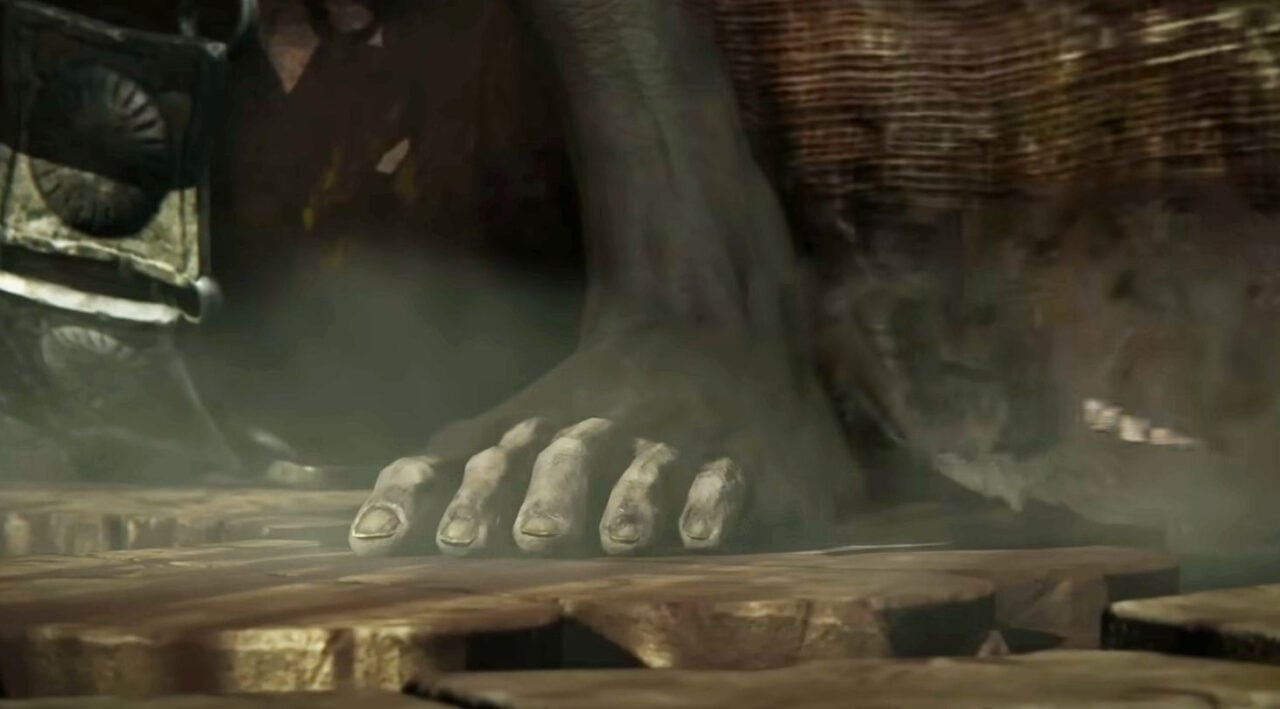
Moreover, the reference to feet in the interview introduces an element of humor and depth. Miyazaki addressed a playful rumor regarding his alleged fascination with feet, a concept that has circulated among fans and critics. Games created by Miyazaki often include barefoot characters and highlight their feet in intricate close-ups, leading to whimsical speculation within the community. This lighthearted facet of interpretation emphasizes the bond between creator and audience in gaming culture, where every detail can lead to numerous theories and dialogues.
The conversation surrounding these themes underscores how Miyazaki’s artistry transcends merely designing demanding gameplay and instead fosters contemplation and dialogue among players. His talent for merging horror and beauty, and addressing the human condition within fantastical realms, has enthralled a worldwide audience. Ultimately, whether one perceives the hands as a symbol of human connection or merely a stylistic element, Miyazaki’s work continues to provoke analysis and admiration, illustrating the significant impact of visual storytelling in video games.