**Nvidia DLSS 5 in NBA 2K27: A Review of AI Rendering Technology**
The recent release of Nvidia’s DLSS 5 technology in NBA 2K27 has generated a mix of skepticism and intrigue among gamers. After wrestling with the idea of AI rendering for months, critics have finally had the chance to observe its implementation in a live game. The overall consensus? It might not be as terrible as initially anticipated.
### The Initial Skepticism
Prior to its official launch, DLSS 5 received significant backlash due to concerns over possible aesthetic compromises and rendering errors. The earlier previews hinted at a potential disconnect between the game’s artistic intent and Nvidia’s ambitious AI rendering capabilities. Many worried that the technology would lead to an undesirable “yassification” of beloved characters, essentially turning them into Instagram models devoid of their original likeness.
### The Performance Trade-Off
When DLSS 5 was tested on two Nvidia RTX graphics cards—the RTX 5080 at 1440p and the RTX 5050 at 1080p—it became clear that the rendering technology comes with a steep performance price tag. The RTX 5080 experienced a 54% decrease in framerate, dropping from an impressive 211fps to 98fps. Meanwhile, the RTX 5050 faced a staggering 67% performance hit, with framerates tumbling from 137fps to a meager 44fps. Such performance dips raise questions about the practicality of using DLSS 5, particularly for competitive gamers who often prioritize high frame rates.
### Aesthetic Results: Not Unpleasant, But…
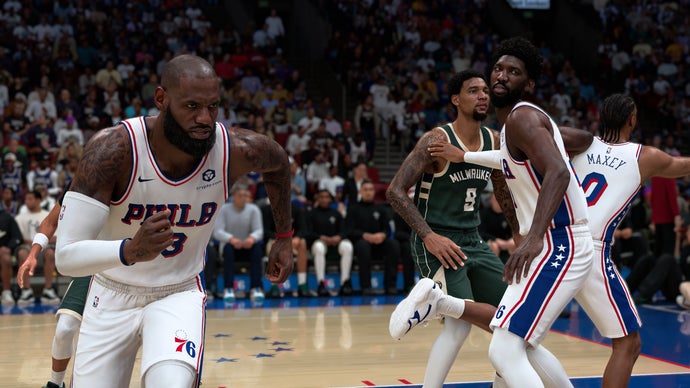
Despite the significant performance costs, visuals with DLSS 5 activated in NBA 2K27 proved to be surprisingly inoffensive. When observing the game, players noted that the photorealistic aesthetic remained mostly intact. The neural rendering doesn’t appear to detract from the game’s original intent; if anything, it adds subtle enhancements, such as improving skin textures and clothing details.
The visual adjustments seem to respect the foundation of photorealism that the developers aimed for. Unlike previous iterations or other games affected by DLSS 5, NBA 2K27’s characters don’t appear overly glossy or artificial. Fans of realism can appreciate that even during gameplay, the characters do not exhibit the fundamental flaws that triggered prior concerns.
### Limited Implementation and Future Applications
Currently, DLSS 5’s capabilities are most effective in environments that prioritize photorealism, like NBA 2K27. However, questions loom about how the technology will perform in games with different artistic styles. Nvidia claims that DLSS 5 is designed to conserve artistic intent, but its reliance on generic models poses a risk of delivering a homogenized look across various titles.
While there may be some initial success in NBA 2K27, it remains uncertain how well DLSS 5 will adapt beyond this specific context. The absence of game-specific training for the AI could lead to limitations in capturing the unique essence of different gaming experiences.
### Conclusion: A Cautious Start
In summary, while DLSS 5 in NBA 2K27 showcases some promising visual improvements, the hefty performance costs cannot be overlooked. The technology has achieved an aesthetically pleasing output—one that stays true to the original game design—but its practicality is still under scrutiny. As Nvidia continues to refine DLSS 5 and expand its applicability, gamers are left to ponder its potential advantages and drawbacks in future releases. For now, the rollout has the gaming community cautiously optimistic while remaining acutely aware of the challenges that lie ahead.