### The Persistent Challenge of Exploration in 4X Games
4X games, which emphasize exploration, expansion, exploitation, and extermination, have faced a recurring issue that has been highlighted by Romain de Waubert de Genlis, co-founder and CEO of Amplitude Studios. He identifies a fundamental problem with the “explore” aspect of these games: it diminishes over time. Players uncover the map and, often, their strategic options become rigid as they become aware of their surrounding resources and enemies. This can lead to a static gameplay experience, where early decisions may dictate the course of the entire campaign.
#### The Aging Map: A Stagnation Risk
De Waubert de Genlis articulates that the diminishing nature of exploration can stifle creativity in gameplay. Players, satisfied with their initial discoveries, may end up following a fixed strategy rather than adapting to new challenges. The detection of this issue, however, transitions smoothly into the realm of solutions.
#### Innovative Solutions in Endless Legend
Amplitude Studios’ innovative approach began with the introduction of changing seasons in the original *Endless Legend*. By implementing shorter summers and longer brutal winters, the game encouraged players to rethink and adjust their approaches as conditions changed. This adaptation fosters a dynamic environment in which players face continually evolving circumstances.
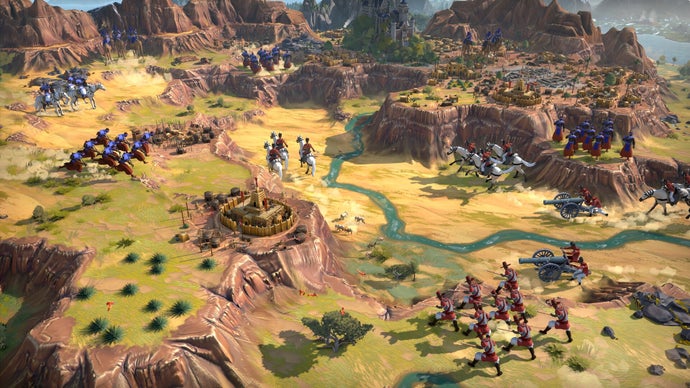
With the upcoming release of *Endless Legend 2*, the shift towards even more dramatic changes is evident. Players begin on fragmented islands surrounded by high seas, which recede over time to unveil new territories. This design decision ensures that players cannot merely fixate on initial strategies but must adapt as the game progresses, effectively shuffling the strategic deck with each turn.
#### Balancing Exploration and Strategy
As players navigate the tech tree in *Endless Legend*, making astute decisions regarding research becomes critical. Players often restart campaigns repeatedly until they secure a favorable starting area that aligns with their desired strategic plan. De Waubert de Genlis notes that a vast majority of players abandon their campaigns prematurely due to an unsatisfactory beginning, suggesting that only about 5% complete a full playthrough.
To address this, Amplitude Studios aims to create balanced initial conditions, where players have access to sufficient resources without extremes. If every game leads to either an overwhelmingly advantageous or disadvantageous starting area, players may be more inclined to restart for a “better” setup.
Furthermore, as new land emerges following the water’s recession, ensuring that it presents both challenges and opportunities becomes crucial. By establishing choke points around valuable resources, the game instigates necessary conflicts, encouraging players to rethink their approach to claiming territory.
#### Perspectives from Other 4X Titles
The challenge of ensuring engaging mid-to-late game experiences extends to other franchises, such as Firaxis’ *Civilization 7*. The developers aim to segment gameplay into digestible chapters, compelling players to navigate through historical crises rather than attempting to manage an expansive game from start to finish continuously. This chapter-based system introduces a new layer of strategy but encountered backlash due to players feeling disconnected from their civilizations.
Humankind 2, the sequel to Amplitude’s earlier title, not only focuses on unique cultures but also opt for an RPG-like evolution system where players can evolve their nation without entirely abandoning earlier choices. This method is intended to maintain continuity and connection to player choices.
#### A Constantly Evolving Genre
As 4X games collectively explore ways to reinvigorate the gameplay loop, strategies vary from responsive environmental changes to structured narrative-driven chapters. The motivation remains steady: to overcome the inherent issues that afflict the genre’s mid-to-late-game engagement.
As Romain de Waubert de Genlis observes, keeping gameplay refreshing and diverse is vital, ensuring that even seasoned players find renewed excitement in their strategic pursuits. The challenge remains — how to harvest curiosity and maintain engagement until the very end of the campaign, providing players with a fulfilling and enriching experience.
In conclusion, while titles like *Endless Legend 2*, *Civilization 7*, and *Humankind 2* offer varied approaches to tackling the “inherent problem” of exploration stagnation, the overarching goal remains clear: to create a dynamic and engaging 4X experience that compels players to adapt, strategize, and thrive in ever-changing landscapes.