### The Trials of Demo Sessions in Gaming: A Deep Dive into Total War: Warhammer 40,000
Demo sessions at gaming conferences often fall short of truly showcasing a game’s potential, especially for titles that require deep strategic thinking and immersion. The nature of these demos, which typically last just 20 minutes in various sections, can lead to a disjointed experience that fails to capture the essence of gameplay. This sentiment is particularly relevant when discussing **Total War: Warhammer 40,000**, a grand strategy game that thrives on the player’s ability to engage deeply with its mechanics.
#### The Nature of Grand Strategy Games
Total War games are designed for what could be described as armchair generals—players who relish the deployment of strategies over extended periods. The expectation is to spend hours becoming engrossed in building empires and orchestrating massive battles. My experience at Gamescom with Total War: Warhammer 40,000, which involved a combination of a 20-minute battle tutorial, a 20-minute campaign tutorial, and a skirmish scenario, left me intrigued yet cautious about what the full game may offer.
#### Key Gameplay Mechanics
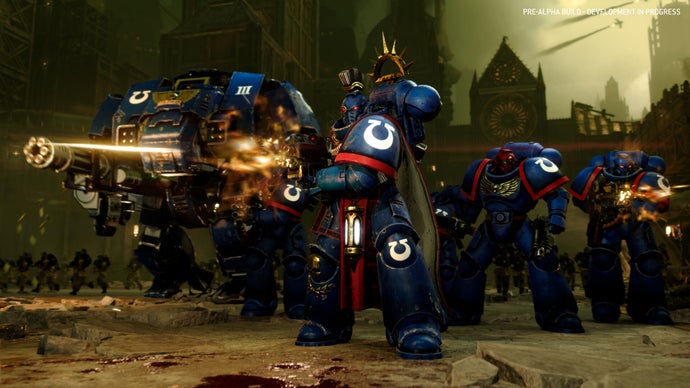
During the tutorials, players learn that battles unfold on expansive terrains where the positioning of units plays a crucial role in a successful strategy. Unlike in some other Total War titles, most units in Warhammer 40,000 are armed with ranged weaponry, adding an extra layer of complexity to battle strategies. A key element introduced is the familiar cover system borrowed from Empire: Total War, emphasizing the importance of terrain in combat. For instance, placing Space Marine units in defensive positions can significantly enhance their effectiveness against Ork assaults.
David Petry, the battle product owner, highlighted another crucial aspect of Total War: positioning often takes precedence over unit matchups. Understanding how and where to deploy troops can alter the course of battles more significantly than simply leveraging unit counters.
#### The Campaign Experience
The snippets of campaign gameplay that I observed involved building bases and maneuvering armies, typical of what players expect from the Total War series. However, the demo failed to showcase the interplanetary mechanics and the elaborate base-building elements. These components are vital for strategic planning as they can provide essential support during battles.
The strategic layer is further enriched with off-map resources, including orbital fleets that can deliver devastating bombardments, pivotal in gaining the upper hand over enemies. However, this intricate system was not explored in the demo, limiting the demonstration of the game’s potential depth.
#### The Skirmish: A Lesson in Strategy
The skirmish scenario I played illustrated the complexities of command under pressure. Tasked with defending against a ferocious Ork onslaught, I struggled to marshal my Space Marine forces effectively. My initial mistake was spreading my units too thin without regard for their specific combat capabilities. The Orks, with their overwhelming numbers, quickly exploited this gap, leading to a rapid defeat.
Despite managing to call in reinforcements from orbit, including powerful Terminator units, my tactics felt disjointed due to the demo’s structure that did not allow for a full understanding of unit abilities. Not being familiar with my troops further compounded the challenge; I attempted to leverage knowledge from the tabletop experience, but found myself overwhelmed with the rapid exchanges occurring on screen.
#### Tactical Depth and Future Prospects
Petry hinted at a significant layer of tactical depth not commonly found in earlier Total War installments. The game allows players to customize individual units, altering their capabilities and tactical flexibility. This innovation requires players not only to master broad strategies but also to retain intricate details about their armies. Such customization could potentially lead to rich, varied gameplay, although it also complicates the decision-making process during heated battles.
#### Conclusion
While my demo experience with Total War: Warhammer 40,000 lacked the depth one would hope from a game steeped in strategy, it was enough to pique my curiosity about the full game. The balance between unit positioning, terrain advantages, and the comprehensive customization options promises to create a complex and engaging gameplay experience.
As the gaming audience turns towards the full release, the hope is that upcoming previews will provide a more comprehensive view that encapsulates the thrill and depth inherent in the Total War series—a series that, when allowed the proper time and space to unfold, returns rewarding and strategic gameplay for those willing to embrace its intricacies.