Uncategorized

Neverness to Everness is confronted with allegations of replacing one GenAI artwork with another.

### The Continuing Debate on AI-Produced Assets in “Neverness to Everness”

Shortly after the creators of *Neverness to Everness* declared their plans to revise AI-generated visuals in their open-world gacha game, a new update was deployed, resulting in major alterations to the game’s assets. The game’s community has reacted variably, especially concerning the substitution of some questioned assets, including a contentious image that has ignited discussions on social media.

#### Context

The issue arose when Twitch VTuber Ironmouse publicly terminated her sponsorship agreement with *Neverness to Everness*. Ironmouse had received assurances from the developers that the game would not incorporate AI-generated assets, only to find out they were part of the completed product. This triggered a backlash from fans and players, leading the official *NtE* Global account to declare that the development team at Hotta Games was “already assessing and modifying” the disputed AI assets.

#### The Updated Patch

With the launch of the most recent patch, it seems modifications have indeed occurred. Particularly, one of the most scrutinized AI-generated elements, a billboard design within the game reminiscent of the anime feature *Weathering with You*, has been reported as replaced. However, some gamers have observed that the new graphic seems to be yet another AI-generated asset, this time showcasing a soda can.

Dissatisfaction with the update has spread across social media forums. One user, ViviVovo, commented, “I suppose it didn’t matter enough because the assets you swapped are STILL AI generated. What is the rationale if you’re merely going to continue deceiving your playerbase?” This viewpoint mirrors a broader discontent among players who anticipated a legitimate enhancement rather than merely exchanging one AI image for another.

#### The Characteristics of the New Visual

Regardless of the visible changes, players have remarked that the replacement image still displays traits of what they refer to as “AI slop,” a colloquial expression for subpar AI art. ViviVovo expanded on this, critiquing the perplexing visual aspects that diminish the intended background role of the image. The complexities of AI art are under examination as many players advocate for more genuine aesthetics, feeling that reliance on AI production undermines the game’s immersive quality.

Interestingly, some assets were entirely eliminated in the latest update, such as the video shown prior to the Pink Paws Heist mission, which has been substituted with a static placeholder. This raises questions about why certain contentious AI elements were swapped out while others persist.

#### Consequences and Future Steps

The ongoing dialogue concerning AI-generated material in *Neverness to Everness* highlights a wider debate within the gaming community about the role of AI in art and game development. If the new image is indeed another AI output, it prompts inquiries not only about the developers’ integrity but also about the ethical ramifications of employing AI-generated content in creative fields.

Furthermore, there is conjecture that the choice to replace the original AI artwork may not have stemmed solely from player backlash but potentially from concerns over copyright violations, especially given the resemblances to *Weathering with You*. This scenario emphasizes the intricate relationship between copyright regulations and the application of AI in creative work, as developers navigate the integration of technology without infringing on creative rights.

#### Final Thoughts

As Hotta Games continues to handle the backlash from players and the consequences of their use of AI in *Neverness to Everness*, the outlook remains unclear. The actions taken in reaction to player input could establish significant precedents for how developers manage AI-generated content in the future. This situation underscores the necessity of transparency and authenticity in game development, particularly in an environment increasingly shaped by technological advancements.

Uncategorized

Rally Point: Leadership Experience with the Xenonauts 2

Thank you for agreeing to meet me, Commander.

Have you met the head scientist? I hate him.

I… haven’t met him yet. Should I?

Don’t, he’s an arsehole. They call me “Commander” but won’t let me fire him. “He’s a genius”, they keep saying. I don’t believe in geniuses. I believe in good teams. He insults the engineers in every report. It’s not even funny! I want to lock him in the workshop and tell them he’s a strikebreaker.

…Because they’re Soviets? Your organisation is unusual. It’s 2009, the seventh decade of the Cold War, yet you’re working with both powers to stop the alien menace.

Yeah, Xenonauts 2 is a modern UFO.

Read more

Uncategorized

Sony Stays Dedicated to Marathon and Its Active Fan Community, Unlike Concord

### Sony’s Dedication to Bungie’s Marathon: A Ray of Optimism Amid Uncertainty

In light of doubts expressed by certain gamers and analysts, particularly concerning player counts on Steam charts, Sony has reiterated its commitment to Bungie’s forthcoming sci-fi shooter, *Marathon*. This stands in stark contrast to Sony’s approach to *Concord*, which has been deemed its largest gaming setback to date.

During a financial call, Sony CFO Lin Tao discussed the company’s outcomes in its studio ventures, revealing that revenue from Bungie’s game portfolio did not meet predictions. As a result, the company adjusted its business strategy, resulting in an impairment charge of around $560 million related to Bungie, increasing the total financial downgrade from the $3.6 billion acquisition to $765 million. A major contributor to this decline is linked to *Destiny 2*, which experienced a significant decrease in its player count after a lackluster expansion and a subsequent delay in content release.

Nevertheless, *Marathon* has not been entirely dismissed. While precise sales figures remain undisclosed, industry projections indicate that the game has engaged between 1 and 2 million players. This situation has led Sony to explore avenues for enhancing *Marathon* rather than cancelling the project as it did with *Concord*.

Lin Tao indicated favorable reception metrics for *Marathon*, highlighting its Metacritic score of 82 and more than 90% positive feedback from players on Steam. Levels of engagement, particularly in user retention, are robust, suggesting a strong core audience. Looking forward, Sony intends to improve the game’s performance by rolling out new content and refining the overall gameplay experience.

Bungie has already presented an initial roadmap for the first two seasons of *Marathon*, with creative director Julia Nardin revealing that a long-term narrative trajectory has been established. While the road ahead holds its difficulties, especially given the game’s high-stakes PvP setting that might discourage casual gamers, Sony appears hopeful regarding the franchise’s prospects.

Though there is a chance of further personnel reductions within the studio, it is clear that Sony envisions a future for *Marathon* that is markedly different from its outcome in the case of *Concord*. The true challenge will be how adeptly Bungie can sustain engagement with its loyal fanbase while drawing in new players who might be reluctant to engage with its demanding gameplay mechanics.

Uncategorized

Helldivers 2 to Feature Expanded Multi-Week Themed Campaigns and Branching Outcomes Starting Summer 2024, According to Arrowhead

Helldivers 2 developers Arrowhead have shared some of their plans to improve the shooter‘s long-running galactic war starting this summer. Weekly major orders – the overarching goals players are given to help guide them towards certain missions that mesh with where the war’s story is currently at, will grow into “longer, multi-week themed campaigns”. Better rewards and more “branching outcomes” are also in the studio’s sights.

Read more

Uncategorized

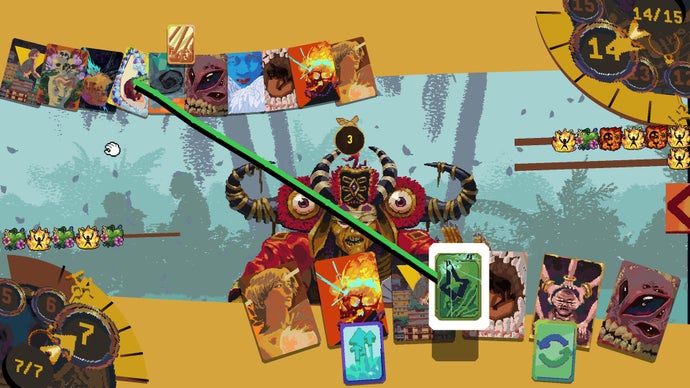
“Discover the Adventure of a Vanquished Final Boss Reconstructing His Existence in This Extraordinary Turn-Based RPG Roguelite”

**Demon Lord: Just a Block – A Distinctive Take on Roguelites and Tactical Gameplay**

In the realm of video games, there’s an unforgettable excitement that comes with overcoming the ultimate boss and witnessing the credits roll. But what becomes of the defeated antagonist? *Demon Lord: Just a Block* offers a fascinating response by enabling players to assume the role—well, more precisely, the skull—of the conquered Demon Lord. This turn-based action-roguelite challenges you to reconstruct your existence following your grand defeat and pursue vengeance against the very heroes responsible for your end.

**Gameplay Overview**

Situated in an enchanting grid-based environment, *Demon Lord: Just a Block* blends tactical confrontations with a vibrant assortment of roguelite features, ensuring that every session feels unique. As you navigate through the adventure, you control the skull of the Demon Lord, the final remnant of a formidable foe. The gameplay starts with simple mechanics—headbutting nearby enemies—but swiftly evolves into a more intricate experience where strategic maneuvering is essential. Enemies are only able to act when you make a move, introducing an additional layer of tactical thought to each turn.

**Exploring the Game World**

In the initial phases of the game, a variety of settings emerge, including combat arenas, shops, and puzzle sections. Here, players meet new characters eager to support the Demon Lord’s mission and contribute their distinctive skills. For example, Lulu, a lively imp, provides upgrades using the souls of fallen adversaries, whereas Murphy specializes in a broad range of weapons that can significantly transform gameplay. Additional characters further enrich the mechanics, introducing alternative play styles based on the number of defeated bosses or incorporating card-game elements to enhance future adventures.

**The Deck System**

Though it’s not a conventional deckbuilder, the game features a “deck” system that determines the types of upgrades players can accumulate during their escapades. Players can concentrate on elemental improvements, such as bomb-oriented or lightning enhancements, or tackle the challenging Invincible Deck. As players interact with the game, they can gather numerous power-ups and enhancements that intertwine in innovative ways, offering extensive customization opportunities.

**Weapons and Upgrades**

The choice of weapons greatly impacts gameplay. For example, the Lightning Chidori permits long-range thrust attacks, while the Chargeable Greatsword necessitates a riskier playstyle that requires remaining stationary to charge. On the other hand, the Godslayer Repeater crossbow relies on movement, providing a dynamic combat encounter that accommodates diverse strategies.

With 14 unlockable weapons and various upgrade trajectories available, players are continually uncovering and trying out new mechanics. The vast array of content guarantees that even after countless hours of play, many options and gameplay elements remain uncharted.

**Conclusion**

*Demon Lord: Just a Block* distinguishes itself as a highly captivating and replayable entry in the roguelite category. Its inventive gameplay approach, combined with a plethora of tactical choices and character interactions, cultivates a unique experience that keeps players returning for more. With a price of $12 on Steam, this game offers exceptional value for those eager to explore the life of the fallen Demon Lord while seeking retribution against bothersome heroes.

Uncategorized

PlayStation Executive Supports AI Integration: “AI Offers More Choices for Gamers”

**PlayStation CEO Champions AI Advancement in Gaming**

In a recent financial briefing, PlayStation CEO Hideaki Nishino devoted a considerable segment of his address to discussing the possible advantages of artificial intelligence (AI) in the gaming sector. Nishino’s vision includes wide-ranging applications of AI tools, indicating that they could improve every facet of the PlayStation experience, from optimizing processes in the PlayStation Store to enhancing graphics in games produced by studios such as Naughty Dog and Guerrilla Games.

Nishino underscored the potential of generative AI and large language model (LLM) technologies to boost efficiency within the creative development workflow. He introduced a proprietary tool named Mockingbird, aimed at swiftly animating 3D facial models through performance capture. This tool enables animation tasks that typically take hours to be finished in just seconds. He clarified that this technology is meant to complement human talent rather than replace it, enhancing data processing from live captures.

The ongoing adoption of AI technologies is already apparent in works from studios like Naughty Dog and San Diego Studio. For example, in titles such as *Horizon Zero Dawn Remastered*, AI-driven instruments have accelerated labor-intensive processes, like hair animation, by using footage of real hairstyles to generate sophisticated 3D models. This innovation allows development teams to spend more time enriching game environments and improving gameplay.

Nishino also pointed out the use of AI-powered racing agents in games like *Gran Turismo*. He hinted at developments that could allow non-playable characters (NPCs) to have distinct personalities, enabling them to interact with players in dynamic and spontaneous ways. This idea was emphasized by a potential prototype of *Horizon Zero Dawn*’s protagonist Aloy, illustrating the capability of generative AI to enable unscripted dialogues within the game.

**Traversing the Future of Gaming Content**

While advocating for the beneficial implications of AI in optimizing operations and elevating player engagement, Nishino also referenced more troubling prospects for the gaming ecosystem. He predicted a possible increase in the quantity and variety of content accessible to players, emphasizing the platform’s role in assisting users in navigating a market that is becoming increasingly saturated.

Concerns are rising about the rise of poor-quality games—often referred to as shovelware—cluttering the PlayStation Store. Nishino’s comments prompted speculation on whether AI could mitigate this issue or worsen it by overwhelming users with even more inferior offerings. He suggested that AI could be instrumental in personalizing recommendations and improving discoverability, potentially guiding players toward quality content in the midst of the clutter.

Looking forward, Nishino imagines a future where AI technology could not only suggest games but also propose gameplay moments, subscriptions, accessories, and merchandise tailored to players’ tastes.

**Challenges Within the Gaming Ecosystem**

Despite Nishino’s hopeful perspective on the transformative power of AI, there are fundamental challenges in the gaming industry, including escalating production expenses. Recent price hikes for the PS5—linked to economic factors, including AI-related shortages in key components—illustrate this tough situation. Notably, the company has reported constraints in PS5 sales projections, arising from its capacity to secure affordable components rather than a lack of consumer interest.

This dual situation presents a dilemma for Sony: while AI is portrayed as a potential remedy for the financial pressures of producing AAA games, there remains doubt about its ability to adequately tackle the industry’s high-budget demands without sacrificing quality. AI promises to enhance graphics and reduce development costs, but its successful deployment will necessitate careful oversight and strategic planning.

In summary, Hideaki Nishino’s ambitious vision for incorporating AI into the PlayStation ecosystem aims to foster creativity and improve player experiences. The success of these innovations will largely hinge on striking a balance between harnessing cutting-edge technologies and upholding the integrity of the gaming landscape.