**The Hidden Effects of Development Choices: Artur Ganszyniec Shares Insights on The Witcher’s Final Cutscene**
Artur Ganszyniec, the principal story designer for the acclaimed 2007 game *The Witcher*, has recently undertaken a thorough 26-episode, 40-hour playthrough of the game. This reflective journey provided fans with a charming retrospective of the title that established a successful trilogy. It was in the final moments of this nostalgic journey that Ganszyniec disclosed vital reflections regarding a crucial facet of the game’s development: the concluding cutscene.
Ganszyniec indicated that the writers at CD Projekt Red were “not really” engaged in developing the final cutscene, which he labeled as a “mistake.” This separation from the story design team carries significant consequences, as it ultimately influenced the narrative trajectory of *The Witcher 2: Assassins of Kings*. The lack of close collaboration on this essential scene led the creative direction for the series to veer off course, pushing the sequel’s narrative into realms that strayed from the original storyline.
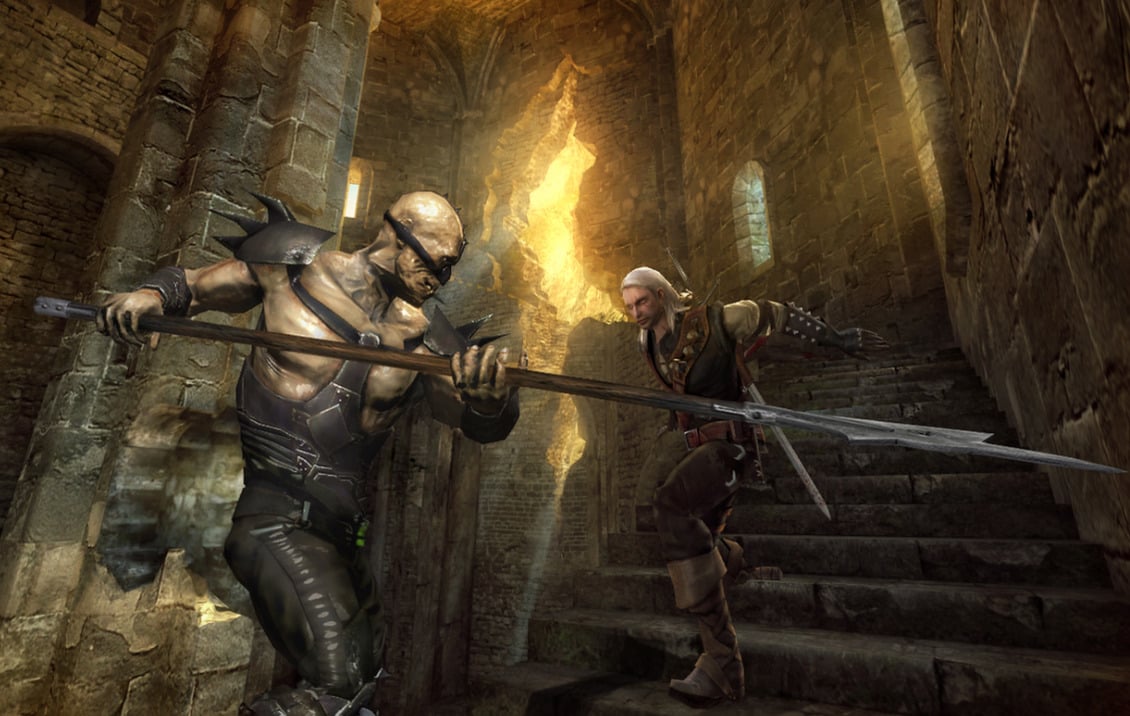
This insight emerged as Ganszyniec viewed the game’s climactic ending, which depicts an assassination attempt on King Foltest. After Geralt, the main character, eliminates the assassin, he learns that the conspirator is another witcher. This surprising revelation drives the story directly into the sequel, where Geralt finds himself imprisoned under suspicions of complicity in the assassination.
Ganszyniec revealed that the script for the concluding cutscene was formulated with little to no input from the story team. He remarked, “The script for this…it was created not really involving the story team. So it was sort of, we weren’t really paying attention. And that was a mistake, I think.” This oversight illuminates the inconsistencies found in the conclusion. The closing narration poses a query about Geralt’s fate, which is abruptly countered by an animated cutscene offering an answer. This incongruity suggests that the original writers aimed to pave the way for an alternative narrative direction that was eventually forsaken.
A point of contention is Geralt’s sudden teleportation back to Vizima at the end of the first game, which felt out of place and left many players confused. The narrative suggested by Dandelion, inquiring, “What then happened to the witcher?” seems misaligned with the definitive portrayal presented in the animated outro. Ganszyniec’s clarification sheds light on this disparity, emphasizing how late-stage decisions made by higher-ups—perhaps swayed by executive influence—overrode the vision of the story team.
In spite of these insights and regret related to the narrative choices made, Ganszyniec expressed optimism for the future of *The Witcher* franchise, specifically regarding Fool’s Theory’s forthcoming remake of the original game. He remarked, “Let’s hope that the remake will be a really good game,” showcasing a hopeful anticipation for fresh interpretations of the esteemed narrative.
In conclusion, Ganszyniec’s reflections on the creation of *The Witcher*’s final cutscene expose how creative processes can be shaped by organizational decisions and underscore the necessity of cohesive collaboration within development teams. As fans look forward to the remake, this understanding serves as a captivating reminder of the roots of the narrative that has enthralled players globally.