### The Censorship Controversy Surrounding Resident Evil Requiem
Recently, social media has ignited discussions about censorship in Capcom’s latest title, *Resident Evil Requiem*. The uproar, however, diverges from typical gaming complaints, such as alterations made to character designs. Instead, the focus here centers on the absence of graphic violence in the Japanese version of the game, following a long-standing trend by Capcom to comply with the nation’s regulatory standards.
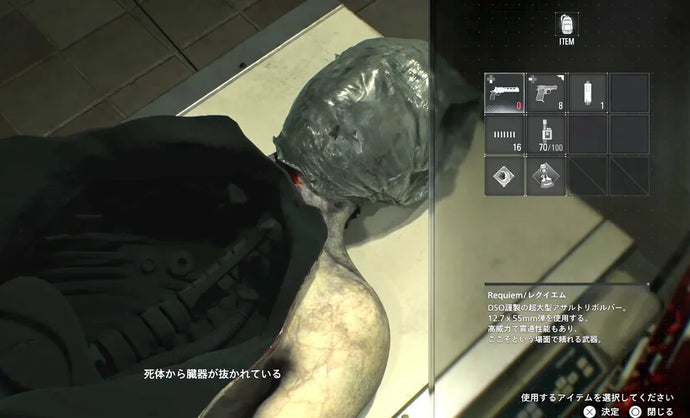
In a surprising shift, certain scenes in the Japanese adaptation have traded visceral gore for dark, shadowy visuals. Where players might expect to see blood and dismemberment, they instead encounter “anomalous pools of shadow” and a more abstract interpretation of death and decay. This method of censorship transforms what would be identifiable gore into a hidden, more ambiguous darkness that reflects a philosophical pondering on existence. It raises intriguing questions regarding the nature of horror—are we merely vessels for the light, overshadowed by the darkness within?
IGN reports on the situation, emphasizing that this is not the first instance of Capcom censoring the *Resident Evil* franchise in Japan. For instance, *Resident Evil 7* dealt with a particularly gruesome scene involving a decapitated head, which was altered for the Japanese audience by replacing the head with a photograph of the character. Such quick fixes have become common, demonstrating the company’s ongoing struggle to balance creative expression with local censorship laws.
The editorial choices in *Resident Evil Requiem* appear to have escalated this practice, not just limiting gore but fully obscuring anatomical details in gameplay. An example includes a puzzle scene where players are to interact with a zombie’s torso, masked by the game’s policy of shadowing explicit content. This alteration, while possibly serving to meet legal guidelines, can disrupt immersion, leading to frustration among fans who expect more from the franchise.
Interestingly, this approach to censorship echoes a broader trend seen in various forms of media, including violent anime, which often resorts to creative methods to depict injury while adhering to regulations. Yet, the current discussion indicates that fans find these solutions lackluster. The ironic juxtaposition surrounding a puzzle that involves replacing internal organs with artificial ones only amplifies this sentiment.
Many gamers have taken to social media to voice their opinions, commonly suggesting that Capcom could exhibit more creativity in navigating these constraints. Suggestions have ranged from whimsy—such as depicting the zombies as filled with candy or bubbles—to more thematic approaches aligned with the game’s lore, which could portray the zombies as being connected to fungal biology.
For those playing the international version of *Resident Evil Requiem*, these concerns may not directly impact their experience. Early reviews have been largely positive, with players appreciating the game as a blend of horror and action. Critics have highlighted its ability to deliver thrills and chills despite the censorship inconsistencies in one regional version.
In conclusion, the debate over censorship in *Resident Evil Requiem* illustrates ongoing tensions between artistic freedom and regulatory compliance, leaving fans to weigh the merits of Capcom’s creative decisions against a backdrop of industry standards. As these conversations continue, they reveal much about the evolving relationship between content creators, players, and the limitations imposed by cultural expectations.