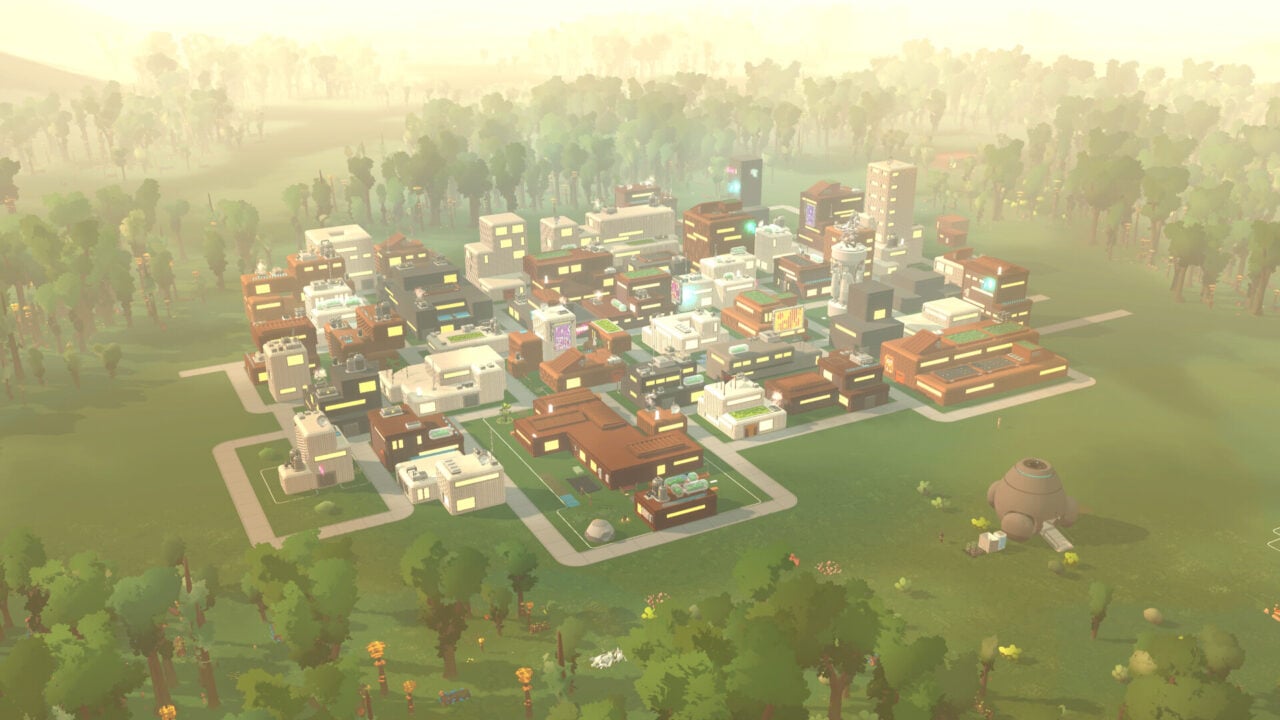
**Investigating the Early Access Journey of *Seed*: A Sandbox Life Simulation Game**
The realm of gaming has witnessed a rise in sandbox life simulation titles, allowing players to construct, nurture, and interact within digital communities. One such game that has sparked enthusiasm is *Seed*, which recently captured players’ interest through an early access key offer. The game offers a cooperative experience where participants, dubbed “cultivators,” oversee “seedlings” and collaborate to build a flourishing community. This piece explores the initial experiences with *Seed*, focusing on its gameplay mechanics, social interactions, and overall promise.
### Overview of the Game Mechanics
Upon entering *Seed*, players can choose a society, specifically Old Greenhollow, and create a character, or seedling—reflecting their in-game identity. The introductory gameplay comprises essential tasks such as scavenging for resources, building shelters, and meeting basic survival requirements like food and hygiene. A notable feature is the game’s demanding nature concerning manual tasks, challenging players to engage in everything from harvesting to constructing water filtration systems to prevent character debuffs like injuries or illnesses.
### Community Engagement
The engagement with other players is arguably the centerpiece of *Seed’s* charm. As players join societies, collaboration is necessary for optimizing resource management and enhancing skill acquisition. With only a few initial members, societies can evolve organically, increasing in numbers and intricacy. The dynamics that arise within these groups can be exhilarating, especially when players take on roles that leverage their strengths. For example, participating as a farmer while others concentrate on mining, healthcare, or engineering encourages specialization within the community.
The societal chat feature facilitates communication and strategizing among players, resulting in a fulfilling collaborative experience. Leadership roles can naturally arise, as evidenced by the election of a player mayor who aids in guiding the society’s growth. These interactions may shift based on player actions, underscoring the significance of social dynamics in enriching the gaming experience.
### Automation and Management of Gameplay
As players dedicate more time to *Seed*, the game integrates an internal clock system that permits seedlings to carry on their assigned tasks even when the player is offline. This aspect allows players to set detailed schedules for their seedlings, imposing time management that mirrors real-world agricultural practices. Cultivating food, collecting resources, and socializing transform into systematic routines that occur independently, enabling cultivators to check progress at their leisure.
Nonetheless, this automation brings about concerns. Players might return to discover their seedlings have unmet needs or experienced mishaps, introducing an unpredictability to the management facet of the game.
### The AI Element and Unique Engagement
A fascinating, albeit contentious, component of *Seed* is the MBA chatbot-like interaction feature that enables cultivators to converse with their seedlings. This segment of the game remains under development and elicits mixed reactions from players. The dialogue often tends to be repetitive and lacks depth, leading some to consider this feature unnecessary. The idea of forming a bond with a virtual character raises interesting ethical discussions, questioning the significance of such programmed interactions in a life-simulation game.
### Future Potential and Development
While *Seed* showcases foundational aspects typical of sandbox life simulations, its early access phase reveals both its potential and existing shortcomings. Players have identified constraints in character models, movement mechanics, and the overall visual presentation, which diminishes the immersive quality generally seen in more polished titles in the genre. The grand promises made by developers about advanced societal simulations, including self-governing communities and real estate ventures, remain unrealized.
The expedition with *Seed* is still in its early stages, leading to doubts regarding its long-term sustainability and evolution. The experience prompts philosophical inquiries about player disengagement and the risk of seedlings aimlessly performing programmed tasks in abandoned societies.
### Final Thoughts
*Seed* offers a unique combination of survival mechanics and social interaction, ultimately crafting an original, if imperfect, life simulation experience. As the game progresses, its development will be pivotal in determining whether it achieves its lofty aspirations. Players are invited to connect with the community, investigate its features, and observe the emergence of societal collaboration while staying aware of the current limitations defining this early access project. The future of *Seed* remains unpredictable, but the concept encourages inquisitive players to engage in shaping a burgeoning digital community.