**The Creation of Firewatch: A Deep Dive into Campo Santo’s Journey**
In May 2014, the small indie studio Campo Santo was embarking on an ambitious project: Firewatch, a first-person narrative exploration game often categorized as a “walking simulator.” The team, primarily based in San Francisco, comprised developers from various regions, including Vancouver, Canada, and Winchester in the UK. In search of inspiration, they packed cars with beer, board games, and tents, setting off for Yosemite National Park. According to Nels Anderson, one of the studio’s founders, the trip was about connecting with nature: “We went camping in the goddamn woods.”
Despite the game’s setting—Shoshone National Forest in Wyoming—being over 500 miles away, the team believed experiencing the forest firsthand would deeply inform their work. Chris Remo recalls feeling a responsibility to encapsulate the essence of their outdoor adventure into the game: “In a year and a half, this is the thing we will have hopefully captured some little part of.”
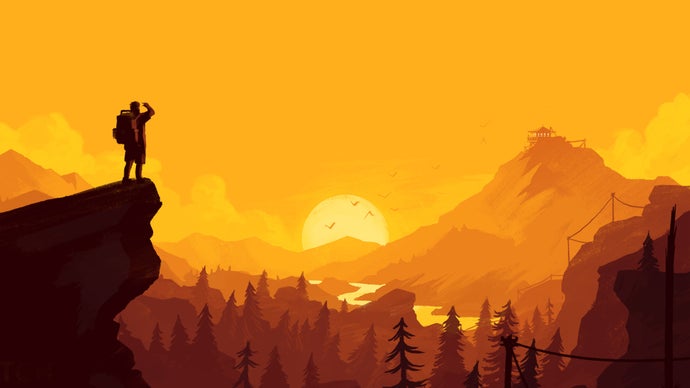
Amidst the towering trees, the developers discovered a decommissioned lookout tower, which would become pivotal to the game’s design. The tower, a solitary relic, offered panoramic views and a sense of isolation that became integral to shaping Firewatch’s atmosphere. Anderson remembered absorbing the significance of this unique place, an idea crystallized by Remo’s vision of telling a story anchored in this environment.
The game’s initial concept, stemming from Sean Vanaman’s experiences in Wyoming, featured a lookout tower and a radio connection with a colleague. Anderson states that while the initial storyline was still rough, the presence of a mysterious communication channel set the stage for deeper narrative exploration.
To deepen the narrative authenticity, Anderson consulted a former fire lookout who provided insights into the isolating yet beautiful experience of working alone in nature. This grounded perspective helped shape the game’s focus on real human emotions rather than overt thrills: “Firewatch is a game that is slightly heightened in a thriller way, but ultimately, it’s about real people in a real place doing a real job.”
Firewatch follows Henry, a man who becomes a fire lookout in Wyoming’s Shoshone National Forest. Through a montage that combines interactive storytelling segments with Henry’s journey, players learn that he is escaping from personal tragedy—his wife’s struggling battle with early onset dementia. Upon reaching his remote lookout, he meets Delilah via radio, and their relationship develops through the investigation of various mysteries, including the disappearance of two teens and the enigma of an abandoned lookout.
Remo underscores the rarity of storytelling in video games that tackles adult issues without resorting to violence. He emphasizes, “It was a human scale story, and there aren’t a huge number of them in video games.” The developers sought to innovate within the walking simulator genre; they wished to engage players without combat or traditional puzzles.
To maintain interest without typical gameplay elements, the team integrated a radio communication mechanic that encouraged exploration. Players could interact with the environment in a way that made them actively consider their surroundings. This lead to a heightened level of engagement as players “shot words” through radio conversations, reframing the walking simulator experience.
Interactions shaped by player choices contributed to a mutable narrative landscape. Players’ dialogue options impacted later conversations and visual elements within the game, fostering a sense of investment in the protagonist’s journey. Anderson elaborates, highlighting the emphasis on characterization over grand narrative stakes. This micro-level narrative interactivity allowed players to experience the story in a personal way.
The team aimed for a grounded physicality, inspired by elements of classic first-person shooters. They implemented interactive components, such as using a padlock to open boxes with common codes, finding humor and realism in the simplicity. Remo appreciated this approach: “This is not some person with an IT department… These are people out in the woods trying to do their jobs.”
The sound design and musical score were crafted deliberately within the context of the story, focusing on the nuanced sounds of nature rather than an overwhelming audio landscape. Remo believed that the game’s themes of solitude and human humility were better served with a subtle soundscape, lending to the immersive experience.
The narrative set in the present represented a challenge that Campo Santo embraced. Unlike many games that relied on uncovering past events, Firewatch’s tension stemmed from ongoing events that shaped the protagonist’s reality. Anderson remarked on the difficulty of balancing present narrative elements within the constraints of a video game.
Limited resources allowed the team to prioritize creativity and innovative storytelling techniques. Despite the challenges, both Anderson and Remo found ways to reflect principles they had ingrained during development in their subsequent projects after Campo Santo was acquired by Valve.
Reflecting on the legacy of Firewatch, Remo noted its impact on inspiring players not just to connect with nature but also pursue careers as fire lookouts. This emotional resonance suggests that the game transcended its initial narrative ambitions, reminding players of the beauty in human experiences.
Ultimately, Firewatch