### Exploring the Quirky Charm of *Big Walk*
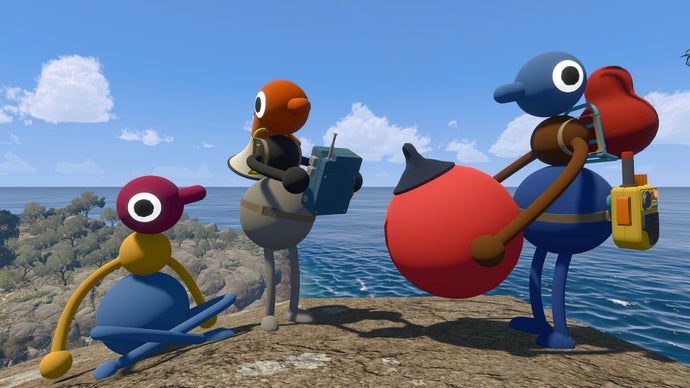
House House, renowned for their hit game *Untitled Goose Game*, presents their latest adventure, *Big Walk*. This whimsical multiplayer experience invites players into an open world inspired by the natural beauty of Wilsons Promontory National Park in Australia. However, what makes this game stand apart from other cooperative games like *Lethal Company* or *Peak* is its unique atmosphere and the absence of danger, encouraging a laid-back interaction among players.
#### Game Mechanics and Atmosphere
In *Big Walk*, players take on the role of quirky birdpeople as they navigate a vibrant landscape filled with spiky grasses, coarse yellow boulders, and an assortment of vivid puzzles reminiscent of an interactive Crystal Maze. Each puzzle pushes players to collaborate, such as one where a player reads out symbols while others search for matching tiles, or another requiring team stacking to reach a button.
With the presence of an expansive world, co-op mechanics, and playful installations like a humming sound shrine or flaregun launchers, players have tools at their disposal to enhance the community-focused gameplay. Character animations add to the charm; players can express themselves through silly movements, such as performing an aeroplane impression or shaking their arms in exuberance.
#### Social Dynamics in Multiplayer Gaming
While *Big Walk* promotes a jovial vibe, the unique mechanics and reliance on proximity and direction-based voice audio introduce subtle social anxieties. The necessity for players to face one another while speaking encourages a level of body language awareness that can add pressure to interactions. This can particularly impact individuals who may find social situations overwhelming, as the game underscores every faux pas, making players acutely aware of their presence and actions.
An anecdote shared by a journalist highlights this intensity. During a preview session, they encountered technical difficulties with their microphone, leading to feelings of awkwardness and self-consciousness among peers. The inability to participate fully in conversations fostered a sense of exclusion, pushing them to engage in comedic antics to mask their discomfort. Such relatable experiences underscore how games like *Big Walk* can invoke deep-seated anxieties tied to social interaction, wrapping them in a layer of playful absurdity.
#### Emotional Depth and Gaming
Interestingly, *Big Walk* reveals how multiplayer video games can evoke emotions that are often overlooked in larger narratives about gaming. The nuances of embarrassment, camaraderie, and social connection emerge subtly, challenging the often-action-oriented portrayal of gaming experiences. This realization leads to a broader appreciation of what games can offer beyond traditional emotional arcs, allowing players to explore everyday vulnerabilities in a light-hearted context.
The game’s gentle approach to humor and the potential for moments of social discomfort can resonate with players on various levels. The humor derived from clumsy interactions or technical mishaps creates a unique bond amongst players, transforming potentially awkward moments into memorable experiences.
#### Conclusion
*Big Walk* is not just a game; it serves as a platform for exploration of social dynamics and emotional intricacies within cooperative gaming. Through its charming visuals, light-hearted puzzles, and subtle psychological engagement, it allows players to navigate the delicate threads of friendship and community while embracing their shared quirkiness. For those looking to experience a delightful mix of adventure and relatability, *Big Walk* is an adventure worth embarking on.