**Saber Interactive and Rideshare Stimulator: The Generative AI Controversy**
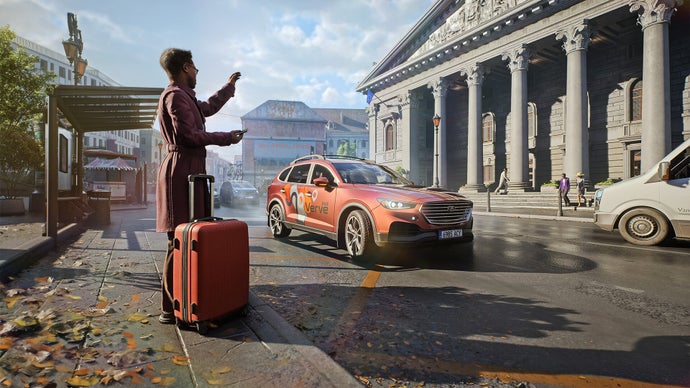
Saber Interactive has recently updated the Steam page for their gig-work game, Rideshare Stimulator, to include information regarding the use of generative AI in its development. This update follows a heated exchange between the game’s former writer, Stella Sacco, and Saber CEO, Matthew Karch, sparked by discussions around the game’s development process and the integration of AI technologies.
Stella Sacco, who served as the lead writer for Saber from July 2023 to July 2024, publicly claimed that he was replaced by ChatGPT during the game’s development. Her comments emerged in response to the announcement trailer for Rideshare Stimulator, where she revealed that the game utilizes generative AI tools for creating passenger voices.
Saber Interactive responded to these claims, asserting that neither their team nor their partner company, Unigine, had replaced any writers with AI for Rideshare Stimulator or any other project. Saber maintained that the entirety of the game’s narrative was composed by human writers, claiming their workforce of over 3,000 employees need not fear job displacement by AI.
Nonetheless, the company did confirm that Rideshare Stimulator includes an experimental free-ride mode that employs AI to maintain engaging gameplay by generating an unlimited number of unique passenger dialogues. Their decision to incorporate AI was driven by the need to avoid repetition among passengers, which they argued would enhance the player experience. This reasoning, however, has drawn criticism, with some questioning the necessity and value of such AI-generated interactions in a gaming context.
As the controversy escalated, Sacco reiterated her position, insisting through private correspondence that she had indeed been removed from the project to allow for the AI to assume her writing duties. She alleged executives considered using AI as a marketing strategy, with the belief that “gamers love new tech.” Sacco’s manager had reportedly opposed the idea to no avail, a reflection of the tension surrounding AI adoption in the gaming sector.
Karch’s public statements have been combative, with him dismissing Sacco’s claims and suggesting her comments were intended to generate controversy. He admitted to the incorporation of AI technologies but asserted that the complete story script and characters were crafted by human writers, although he conceded that certain aspects of the game were indeed reliant on AI for additional content.
The unfolding dialogue highlights broader concerns about the implementation of generative AI in creative fields, with notable skepticism regarding its potential to replace human roles. While Saber argues that its AI tools are designed to enhance workflow rather than cut costs or displace personnel, industry trends showcase a different narrative. Executives across the gaming landscape have begun viewing AI integration as a pathway to reduce workforce needs, with significant layoffs occurring under the guise of technological advancement.
Saber’s eventual disclosure on its Steam page goes beyond addressing Sacco’s claims, revealing that generative AI also contributes to the game’s music, alongside conventional human-made tracks. This multifaceted use of AI has opened further discussions about its implications on the creative arts, highlighting a need for transparency regarding the technologies used in game development.
The updated Steam page clarifies that the main campaign’s story and characters are penned by human writers, with AI utilized for voice generation, localization, and the optional free-ride mode missions. In a notable move, the game will label radio stations featuring AI-generated music, allowing players to easily identify the sources of in-game content.
As Rideshare Stimulator nears its launch, the conversation surrounding AI’s role in gaming continues to evolve, spotlighting ongoing tensions between innovation, workforce integrity, and the essence of storytelling in video games.