### Exploring the Thrills of Wind Runners: A Roguelite Dogfighting Experience
**Introduction**
Dogfighting games have long captivated players with their fast-paced aerial action and strategic combat. For fans like myself, who fondly recall experiences from classics like *Elite* played on old machines, modern iterations bring both nostalgia and excitement. One such game, *Wind Runners*, has recently emerged as a highlight in the roguelite genre, offering a blend of bullet hell mechanics with engaging dogfighting gameplay.
**Game Dynamics and Aesthetic**
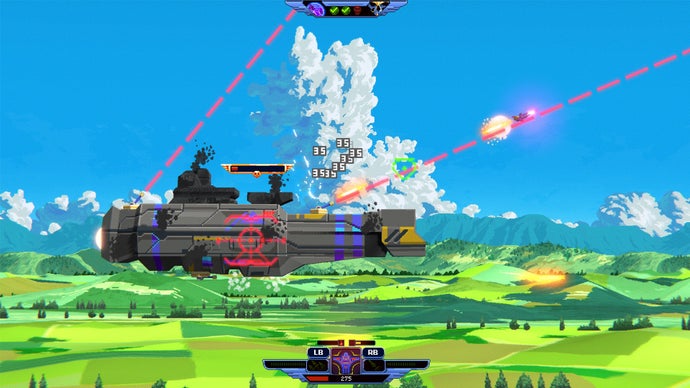
In *Wind Runners*, players assume the role of a fighter pilot opposing a vast techno-religious navy that has taken control of the solar system. The game’s presentation, reminiscent of a Saturday morning cartoon, adds a vibrant flair. Players navigate through beautifully rendered worlds, complete with snow-capped mountains and sleek, utopian architecture. The environment is reactive—flying low causes noticeable splashes of water, enhancing immersion.
The control mechanics are intuitive, utilizing the left stick for angle adjustments, with boosts and braking mapped to the A and B buttons. Primary fire is executed using the right trigger, and successful hits charge special weapons, offering strategic depth in combat—this is where the thrill intensifies.
**Roguelite Structure and Combat Mechanics**
Unlike its predecessor, *Luftrausers*, *Wind Runners* incorporates a roguelite structure that adds layers of challenge. Each run involves a raid across multiple stages, showcasing varied objectives such as shooting down enemy fighters, sabotaging anti-air emplacements, or taking down imposing battle cruisers, culminating in a showdown with an admiral. This structure is where persistence and health management become crucial, as damage is carried over between stages, raising the stakes for every encounter.
The persistent health mechanic creates a risky dynamic; players are encouraged to remain aggressive to charge special weapons while dodging enemy fire. The challenge is amplified by larger foes equipped with devastating turrets—making strategic retreat essential but often overlooked by players eager to engage.
**Engagement and Learning Curve**
Even in the face of repeated failure, the game’s allure remains strong. The exhilaration of skillful maneuvers—dodging bullets while executing an airbrake to line up a missile shot—is thoroughly rewarding. Importantly, battles are not just a test of reflexes but also of strategy; players can capitalize on enemy weak points, systematically dismantling their firepower over time.
However, many players, including myself, may struggle with the tactical aspect of knowing when to disengage. It’s tempting to remain in a strafing dive, focusing solely on inflicting damage, while neglecting defensive maneuvers against incoming fire. This leads to a cycle of trial and error, where the satisfaction of eventually completing a raid feels ever elusive.
**Conclusion**
*Wind Runners* exemplifies modern dogfighting games that embrace a balance of vibrant aesthetics, strategic gameplay, and roguelite elements. It offers both challenge and satisfaction, continuously enticing players to dive back into the fray, despite the occasional setbacks. The ongoing pursuit of skill improvement ensures that each playthrough remains engaging, solidifying *Wind Runners* as a standout title in the genre.